"Bird dogs" most commonly refers to a category of hunting dog bred and trained to locate, flush, and retrieve birds during a hunt. That's the core, literal meaning you'll find in any dictionary. But depending on where you saw the phrase, it might also carry a figurative or slang sense, and the variant "no bird dogs" adds yet another layer of interpretation. Here's how to quickly figure out which meaning applies to your situation.
Bird Dogs Meaning: Literal Hunting Use and Common Slang

Marcus Holloway
3 Apr 2026
How to interpret "bird dogs" in everyday language
When most people stumble onto the phrase "bird dogs," they're usually in one of three situations: reading about hunting, seeing a sign or rule somewhere, or encountering it in conversation or song lyrics. The meaning shifts pretty dramatically depending on that context, so the first thing to do is ask yourself where exactly you saw or heard it.
In everyday speech, "bird dogs" can function as a noun (the actual dogs), a verb (to bird-dog someone means to watch them closely or pursue something doggedly), or as part of a set phrase or saying. Merriam-Webster formally lists "bird-dog" as a verb meaning both "to closely watch someone or something" and "to doggedly seek out someone or something." That verb usage crept into common use in the early 20th century and has stuck around ever since. So when your coworker says she's going to "bird-dog that contract until it's signed," she's not talking about any actual dogs.
A good rule of thumb: if the phrase appears in a conversation about work, sports, or daily life without any hunting context nearby, lean toward the figurative sense. If it appears alongside words like "field," "retriever," "pointer," "upland game," or "pheasant," it almost certainly means the real dogs. Understanding the bird dog saying and its deeper meaning can help you catch these contextual cues faster.
Bird-dog meaning in hunting and sport (the literal role)
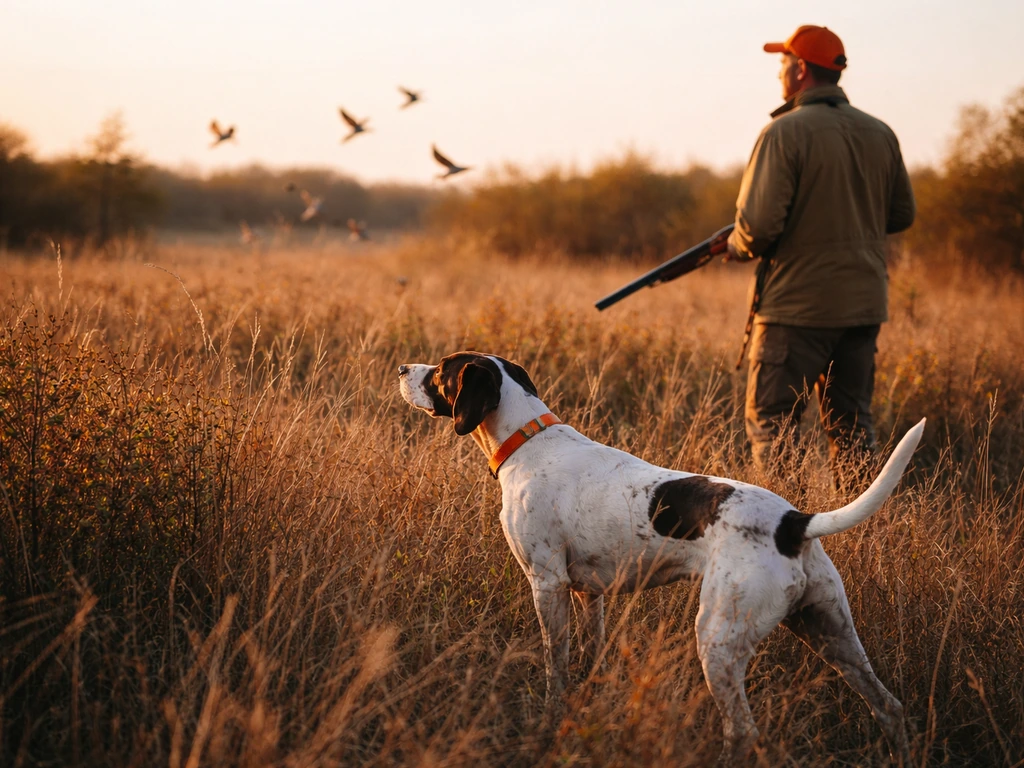
Literally speaking, a bird dog is a dog specifically selected and trained to assist hunters in finding and recovering game birds. The category includes breeds like English Setters, German Shorthaired Pointers, Labrador Retrievers, Spaniels, and Vizslas, among others. Each breed has a slightly different job within the hunt, but they all fall under the "bird dog" umbrella.
The classic bird dog workflow goes like this: the dog ranges ahead of the hunter, uses its nose to detect bird scent, either freezes in a point (pointing breeds) or flushes the bird into the air (flushing breeds), and then retrieves the downed bird after the shot. It's a deeply collaborative relationship between hunter and dog, and serious upland hunters will tell you the dog is doing most of the actual work.
When you see "bird dogs" on a hunting club sign, a field trial registration form, or in a discussion about gun dogs, this is exactly the meaning in play. No ambiguity there. The phrase is also used in competitions called field trials or hunt tests, where bird dogs are judged on their range, nose, style, and obedience. VCA's Field Trials overview for pointing breeds describes expectations like standing on point, being steady while a bird is flushed, and retrieving when the competition includes official gunners field trials or hunt tests, where bird dogs are judged on their range, nose, style, and obedience..
Slang and figurative uses of "bird dogs"

Outside of hunting, "bird dog" (and its plural "bird dogs") picks up several figurative meanings that are worth knowing. Collins Dictionary defines the verb form as "to search out diligently," "to follow or watch carefully," and "to control closely with unceasing vigilance." That last one is telling: the image is of a dog that never takes its eyes off the quarry.
In real estate and sales, a "bird dog" is a person who scouts out leads or deals and brings them to a buyer or agent in exchange for a fee. You'll hear phrases like "he's my bird dog" in those industries, meaning he finds the opportunities and someone else closes them. It's a direct extension of the hunting meaning: the dog finds the bird, the hunter takes the shot.
There's also the pop culture angle. The 1958 Everly Brothers hit "Bird Dog" uses the phrase to mean a rival who moves in on someone else's romantic interest, like a dog that steals another hunter's bird. If you're trying to decode the meaning behind the Bird Dog song, that jealous-rival interpretation is the one the lyrics are working with.
More broadly, when someone says they're going to "bird-dog" a situation, they mean they'll keep a close, persistent eye on it until it resolves. Think of a project manager who "bird-dogs" a vendor to make sure a delivery happens on time. It's a common enough phrase in business and military contexts. For a deeper look at the verb form specifically, what "bird dog it" really means breaks down how people use it in action.
What about "no bird dogs"?
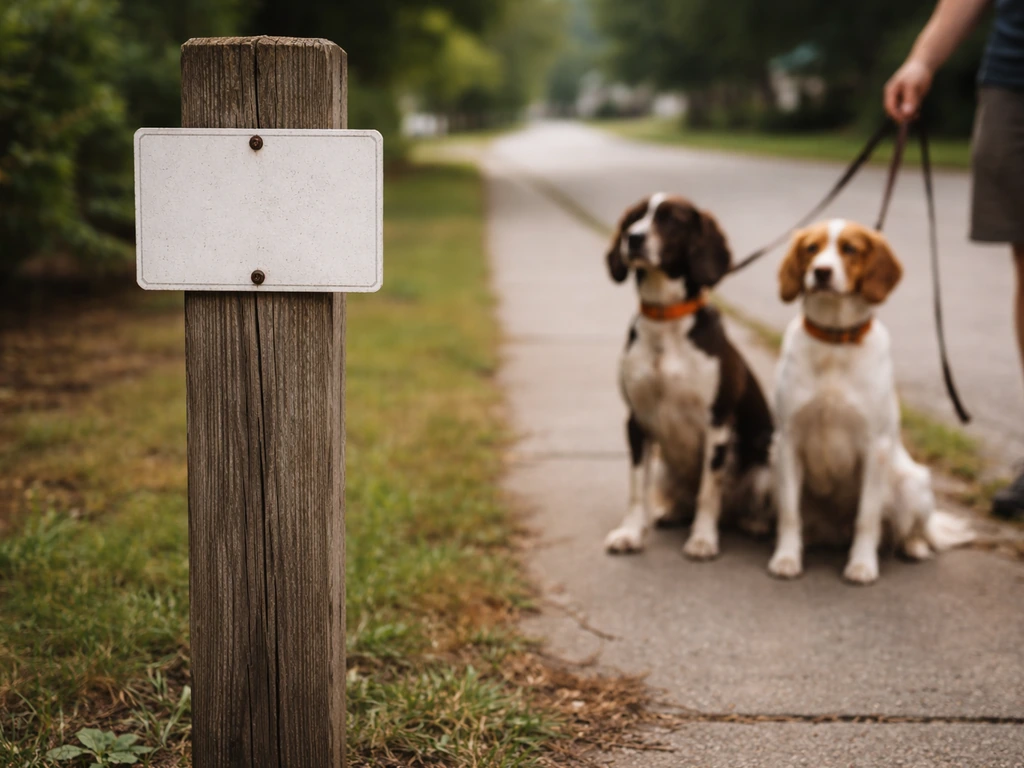
This is the variant that trips people up the most. If you saw "no bird dogs" on a sign or in a set of rules, the most common interpretation is literal: dogs are not permitted in that space or event. You might see it at a hunting preserve that doesn't allow outside dogs (only their own trained dogs work the grounds), at a sporting event where outside animals are restricted, or as part of a venue policy. It's essentially shorthand for "leave your hunting dogs at home."
Less commonly, "no bird dogs" can appear in a business or real estate context meaning "no scouts, no referral agents, no middlemen." A seller putting "no bird dogs" in a listing is signaling they want to deal directly with buyers, not with people who earn a finder's fee for bringing buyers to them.
If you're genuinely unsure which "no bird dogs" you're looking at, check the surrounding context for other rules or restrictions. A list that also mentions "no ATVs" or "no outside game" is almost certainly about animals. A list alongside "no wholesalers" or "no assignments" is almost certainly about business practices.
Common misconceptions and why people get this phrase wrong
The biggest misconception is assuming "bird dogs" always means actual dogs. Because the phrase functions as both noun and verb, and shows up in business, music, and everyday conversation, it's easy to misread the context. I've seen people confused about "bird-dogging" a competitor thinking it meant something derogatory or obscure, when it simply meant tracking them closely.
Another common error is conflating the phrase with unrelated slang. If you search "bird dog" in informal dictionaries, you'll find some colorful street-level definitions that aren't part of standard usage. For a grounded look at how the term lives online versus in real life, checking out the bird dog meaning on Urban Dictionary is useful context, but treat those definitions as community slang rather than standard English.
People also sometimes mix up "bird dog" with related but distinct phrases. "To bird-dog someone" carries a specific meaning of persistent surveillance or pursuit, and it's worth understanding that nuance on its own terms. The article on what it means to bird-dog someone is worth a read if that's the specific use case you're trying to decode, because the connotations (positive persistence vs. unwanted surveillance) depend heavily on who's doing it and why.
Finally, some people assume the phrase is archaic or obscure. It's not. Merriam-Webster's formal entry for the verb form confirms it's current, recognized standard usage, not dated slang. You'll encounter it in mainstream journalism, business writing, and casual conversation without anyone raising an eyebrow.
Quick decision guide: which meaning you want and how to confirm it
Here's a practical reference to help you identify which meaning of "bird dogs" (or "no bird dogs") is in play based on where and how you encountered it.
| Context where you saw it | Most likely meaning | How to confirm |
|---|---|---|
| Hunting preserve sign, field trial rule, dog training forum | Literal: trained hunting dogs | Look for breed names, field trial or hunt test references nearby |
| Real estate listing, investment group ad | Figurative: a lead-finder or deal scout | Check for other business terms like "wholesaler" or "assignment" |
| Business conversation ("I'll bird-dog this") | Verb: to watch closely or pursue persistently | Tone and subject matter; it's almost always the verb form here |
| Song lyrics, pop culture reference | Slang: a romantic rival or someone poaching your interest | Look up the specific title; Everly Brothers usage is the classic |
| "No bird dogs" on a sign with other pet/animal rules | Literal: dogs not permitted on premises | Other nearby restrictions (no ATVs, no outside game) |
| "No bird dogs" in a real estate or sales context | Figurative: no referral agents or scouts | Surrounding terms like "no middlemen," "direct buyers only" |
When in doubt, the fastest path to clarity is to look at the two or three words immediately surrounding the phrase. Context almost always gives it away within a sentence or two. If you're still stuck after checking the surrounding text, search the exact phrase alongside the domain where you found it (hunting, real estate, music) and the correct meaning will surface quickly.
The bottom line: "bird dogs" is a phrase with genuine range, moving from a concrete working animal to a verb describing sharp, persistent focus. Most of the time, the literal hunting-dog meaning and the figurative "watch or pursue closely" meaning are the two you'll actually encounter. Keep the context in view and you'll land on the right interpretation every time.
FAQ
How can I tell whether “bird dogs” is referring to actual hunting dogs or the “watch closely” meaning?
Usually you can tell by the immediate nouns nearby. If you see bird-related words (pheasant, upland, retrieve, pointer), it means hunting dogs. If you see action-and-attention language (watch, follow up, monitor a lead), it means the verb use, “to keep a persistent close eye.” If you see neither, treat “bird dogs” as a reference to people in sales or real estate rather than an animal, and look for words like leads, referrals, fee, or listing.
Is the correct phrasing “bird dogs,” or should it be “bird-dog” (as a verb)?
The figurative verb is “bird-dog” or “bird-dogging,” not “bird dogs.” So “I’m bird-dogging this contract” is standard, meaning you are actively pursuing or monitoring until it’s handled. If someone says “I’m doing bird dogs,” that’s likely a mistake or a misunderstanding of the idiom.
What does “bird dog” mean in real estate or sales, and is it always a legal referral fee situation?
In business and real estate, “bird dog” commonly means a scout who finds opportunities and then connects them to the decision-maker, often for a fee. Many states and firms treat referral arrangements differently, so if you are offering or receiving “bird-dog” compensation, confirm it complies with local licensing and brokerage rules rather than assuming it is casual slang.
Does “no bird dogs” always mean dogs are not allowed?
It can be both, depending on where it appears. “No bird dogs” at an event usually means outside animals are prohibited (or only approved/own dogs may operate). “No bird dogs” in a listing or negotiation usually targets middlemen and referral agents. If the sign includes only animal-related restrictions (like dogs, leashes, outside pets), assume it is about animals.
If I see “no bird dogs” on a listing, what clues indicate it means “no scouts/referral agents”?
Often it targets outside leads or referral partners, meaning the seller or venue wants to deal directly. Watch for neighboring terms such as “no referrals,” “no agents,” “no assignments,” “no wholesalers,” or “no broker fees,” which strongly indicate the business meaning rather than an animal policy.
Can “bird-dogging” ever be negative, or is it always just persistent follow-up?
A common mix-up is assuming “bird-dogging” is always negative or hostile. In practice, it can be neutral or even professional, meaning diligent tracking. Whether it sounds intrusive depends on context, such as a project follow-up (acceptable) versus “tracking” a coworker personally without a work purpose (likely unwelcome).
How do “bird-dog” and “follow up” differ in everyday workplace use?
Yes. In fields like business, military, or operations, “bird-dog” can mean maintaining control over a process milestone, like ensuring a vendor ships, a document is returned, or a response is received. It is less about “being on site” and more about persistent verification and escalation until resolution.
Why do I see weird “bird dog” meanings online, and should I trust informal slang dictionaries?
People sometimes use “bird dog” loosely online and include nonstandard street definitions. If you want the meaning that will match how most people use it in mainstream writing, rely on the hunting and the “watch or pursue closely” meanings, and ignore extra unrelated definitions unless the conversation clearly adopts them.
What should I assume if “no bird dogs” appears in a list with other rules?
If you see “no bird dogs” together with unrelated restrictions, the safest interpretation is to read it as a targeted rule about the most relevant category. For example, “no bird dogs” plus “no ATVs” and “no outside animals” points to animals. “No bird dogs” plus “no assignments” points to business practices.
If I want to use the phrase correctly in writing, how should I format it?
If you are writing or speaking, match the form to the intended meaning. For the verb sense, use “bird-dog” (for example, “We’ll bird-dog the timeline until it closes”). For the animal sense, use “bird dogs” or name the breed category. Avoid using “bird dogs” as a verb, because that is a frequent source of confusion.
Next Article
Bird Blindness Meaning: Causes, Signs, and What to Do Now
Bird blindness meaning: spot signs, tell vision loss from other issues, and take safe action or get urgent vet care.