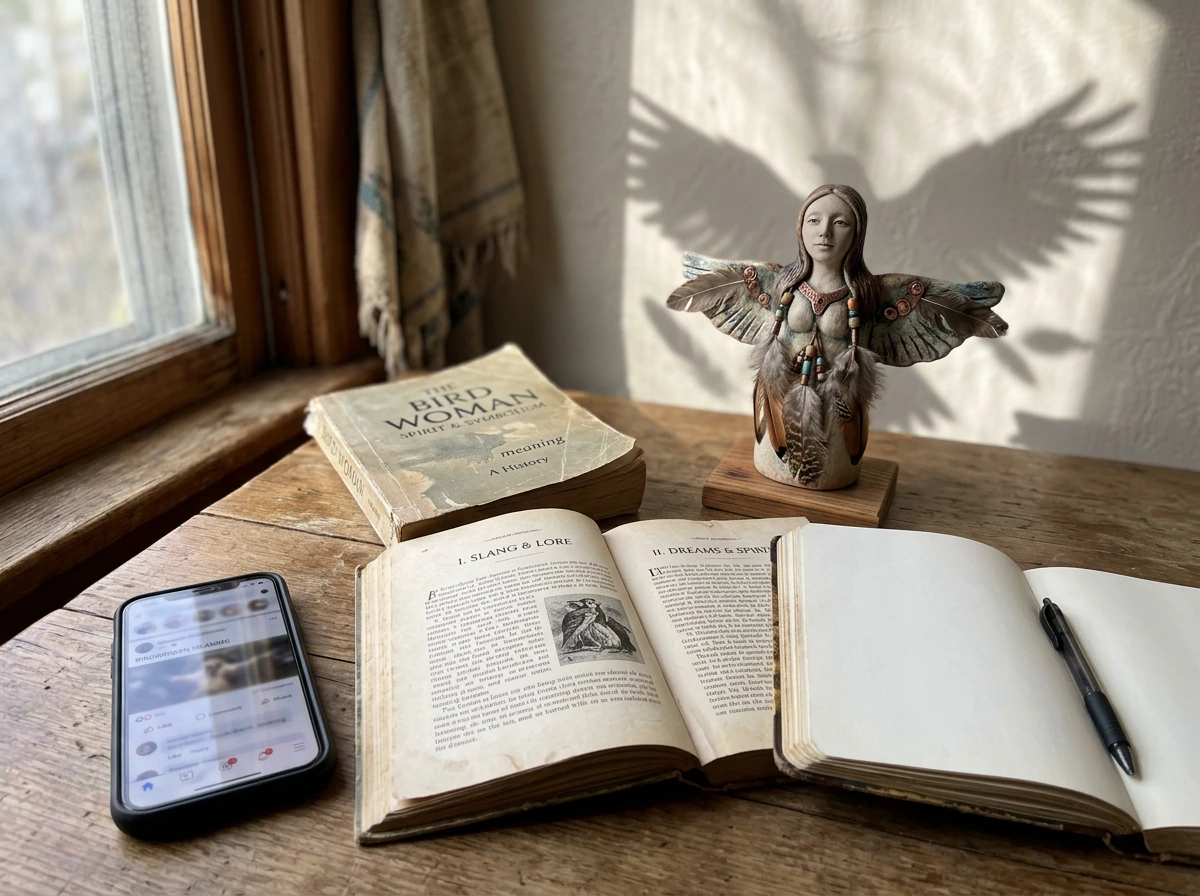
When someone searches 'bird meaning woman,' they're almost never asking one single question. For slang uses, the key idea is that “bird” can function as a term for a woman or girl, depending on the context bird meaning slang. The phrase pulls in at least four different directions: symbolic or spiritual meaning (which bird species are culturally tied to femininity or female energy), slang usage (in British and some online dialects, 'bird' literally means a girl or woman), dream interpretation (what it means when a woman dreams of birds, or when birds show up in dreams linked to a woman), and superstition or folklore (the long tradition of birds as omens near a woman's home or life). Which one applies to you depends entirely on context, and this guide walks through all of them.
Bird Meaning for Woman: Symbolism, Slang, Dreams Explained

First, figure out which 'bird meaning' you're actually looking for
The query 'bird meaning woman' is genuinely ambiguous, so it helps to pin down what you're trying to solve before diving in. If someone used 'bird' to describe a woman in conversation or in something you read online, that's a slang question. If you had a vivid dream involving a bird and you're a woman (or the bird seemed to represent a woman), that's a dream interpretation question.
If a specific bird keeps appearing near your house or crossed your path in a memorable way, you might be looking for a behavioral or omen-based answer. And if you're exploring which birds carry feminine or goddess-linked symbolism across cultures, that's the spiritual and mythological angle. The sections below cover each one directly.
Bird species tied to women and femininity across cultures
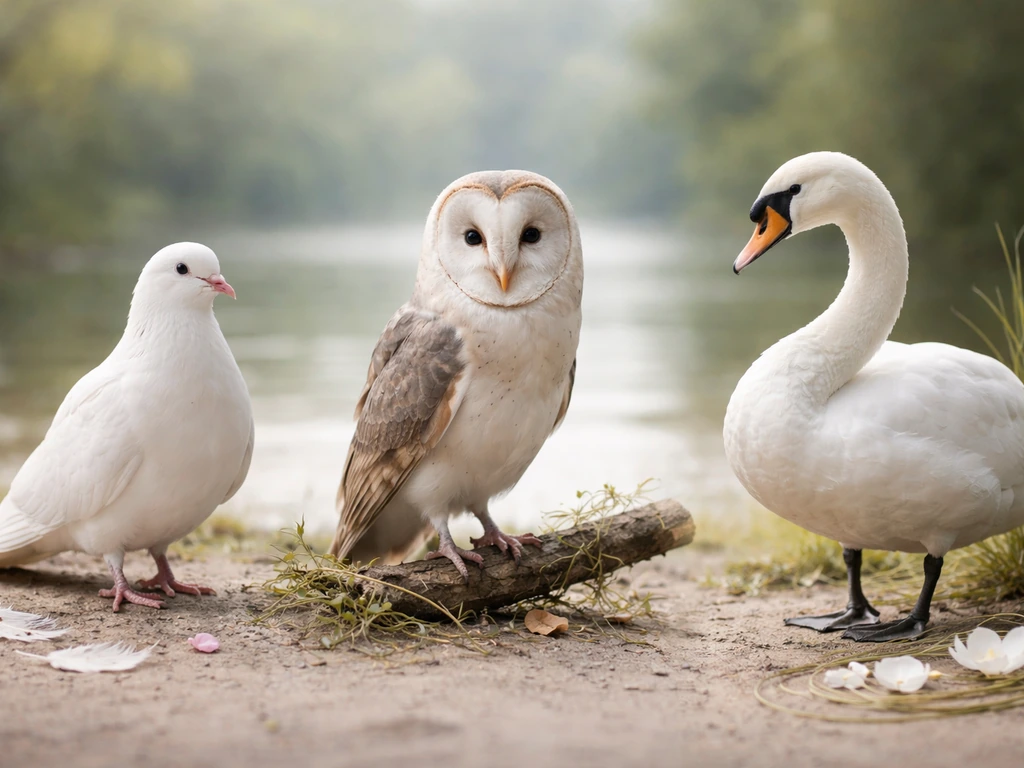
Certain birds have been linked to women, goddesses, and feminine energy for thousands of years across wildly different cultures. This isn't random: birds that were associated with love, the moon, motherhood, fertility, or protection tended to get coded as feminine over time.
The dove: love, fertility, and sacred femininity
The dove is probably the oldest bird symbol tied to a female divine figure. In Mesopotamia, the dove was sacred to Inanna and Ishtar, the goddess of love and sexuality. That connection ran so deep that doves appeared on temple imagery and in offerings associated with her worship. In Christian tradition, the dove became a symbol of the Holy Spirit, and notably, the Hebrew word 'ruach' (spirit/breath) is grammatically feminine, which has led some scholars to associate dove symbolism with a softer, nurturing aspect of the divine. For women exploring personal symbolism, seeing a dove near the home is almost universally interpreted as a sign of peace, new beginnings, or a gentle message from someone passed.
The owl: wisdom, protection, and (occasionally) death
The owl is complicated. In classical Greek tradition, it was sacred to Athena, goddess of wisdom, making it a strongly feminine symbol of intelligence and protection. In many Native American traditions, however, the owl is associated with death or a signal that death is near. That said, the Pawnee viewed owls as protectors rather than omens of doom. The point is: owl symbolism changes dramatically depending on the cultural lens you apply. A woman with a strong connection to owl imagery isn't universally receiving a warning or a blessing. Context and cultural origin matter.
The swan, crane, and hummingbird
Swans carry long associations with grace, beauty, and transformation, qualities traditionally linked to idealized femininity in European folklore. Cranes appear in East Asian traditions as symbols of longevity and fidelity, often tied to marriage and enduring love. Hummingbirds, particularly in Indigenous American traditions, frequently carry meanings of joy, healing energy, and resilience. If a woman resonates personally with any of these, the symbolism layers naturally onto both personal spirituality and cultural heritage.
What real bird behavior near a woman's home actually means
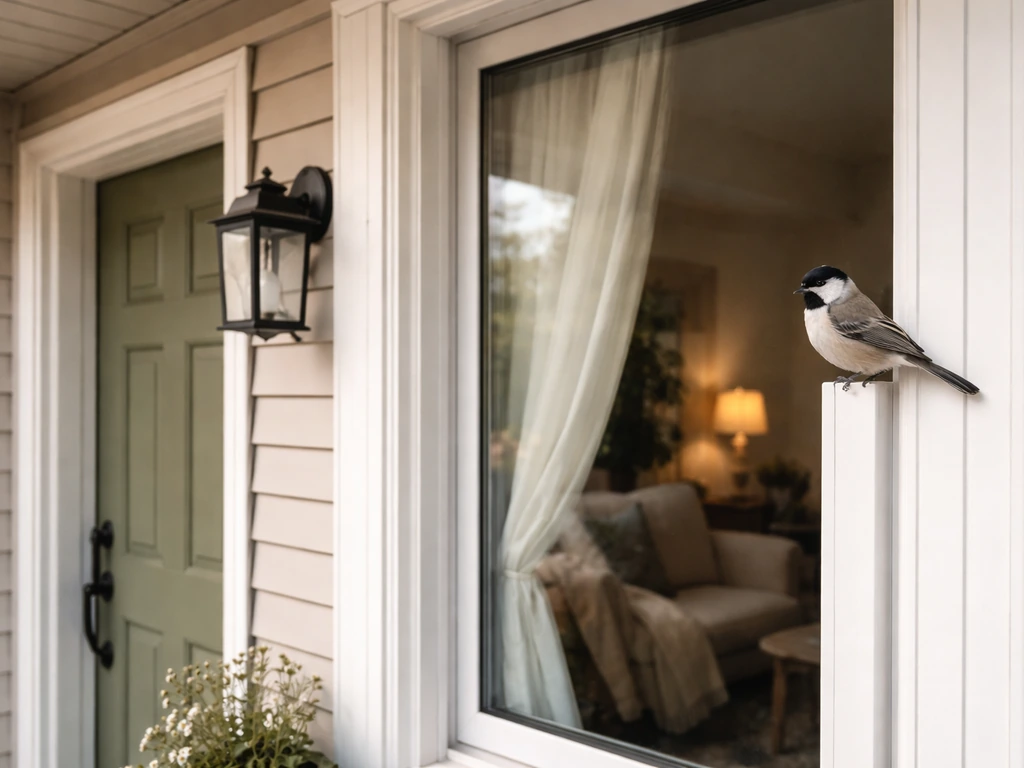
Before assigning a spiritual meaning to a bird's behavior, it's genuinely worth understanding what's actually happening, because the two explanations don't have to cancel each other out.
Birds hitting windows
One of the most common 'omen' experiences people report is a bird flying into their window. Folklore often frames this as a warning or a message from the dead. Ornithologically, the U. S.
Fish and Wildlife Service and Massachusetts Audubon both explain the same thing: birds strike glass because they don't perceive it as a barrier. When glass reflects the sky or nearby trees, birds see open sky and fly straight into it.
It has nothing to do with the household's circumstances. If this happens repeatedly, the USGS recommends applying external patterns (like decals or tape grids) to break up the reflection and make the window visible to birds. That said, if you find it meaningful and want to treat it as a message, nothing stops you from holding both explanations at once.
A bird hovering near you, nesting close, or following you
Birds that seem to follow a person are usually responding to behavioral cues: someone who regularly feeds birds, works outdoors, or moves through a territory that overlaps with a bird's foraging zone will see the same birds repeatedly. Nesting near a home is almost always a function of habitat quality, not a spiritual message. That said, folklore across many cultures does treat a bird choosing to nest near a woman as a sign of blessing or fertility. You can honor that tradition while also appreciating that the bird picked your eaves because they offered shelter, not prophecy.
The crow question
Crows near a woman's home are among the most searched bird-omen questions. Dartmouth's folklore archive records them as omens of bad luck, disease, or death in multiple European folk traditions. But Native-Languages.org points out that, in most Native American traditions, crows are not death omens at all. They're viewed as intelligent, trickster figures, often carrying messages or wisdom. A crow outside your window is most likely a crow being a crow: highly intelligent, attracted to routine environments, and curious. Whether you read that as a message is a personal choice, not a universal rule.
When 'bird' just means a woman: slang and colloquial usage
If you encountered 'bird' being used to mean a woman in a conversation, song, show, or online post, you're dealing with slang, not symbolism. For the literal slang interpretation of bird woman meaning, see how 'bird' is used colloquially for a girl or woman in the next section. 'Bird' as a term for a girl or woman is predominantly British in origin.
Wikipedia's British slang entry lists it directly, and sources tracking colloquial usage confirm it has been in circulation in the UK for decades. It's casual, sometimes affectionate, sometimes dismissive depending on tone and context. You can also see this as part of the broader bird mom meaning conversation when people mix bird symbolism with relationship and identity clues.
More recently, the word has been picked up in online spaces and on TikTok with shifting connotations. Dazed covered how 'bird' moved into newer dating and social media slang, where it can carry a slightly insulting edge depending on delivery, essentially implying someone is scatterbrained, flighty, or easy to fool. Whether it's affectionate or cutting depends heavily on who's saying it, to whom, and in what tone. If you saw 'bird' used about a woman in a British context, it's roughly equivalent to 'girl' or 'woman.' In an online or American context, check the tone of the surrounding text before assuming it's neutral.
Dream interpretation: birds in women's dreams (and what changes the meaning)
Birds appear frequently in dream material, and the details matter enormously. A dream about a soaring eagle means something different from a dream about a dead sparrow on a windowsill.
General bird dream symbolism
Across most popular dream interpretation frameworks, birds are positive symbols when they're active, free, and healthy: they typically represent freedom, spiritual connection, aspirations, or transition. DreamDictionary.org frames bird dreams this way broadly, associating them with hope and movement. From a Jungian perspective, birds can represent thoughts, ideas, or the transcendent parts of the psyche, the parts of yourself that rise above daily concerns. A dead bird in a dream tends to flip that: it can signal the end of something, a loss, or a warning that a hopeful situation has closed.
Traditional and cross-cultural dream meanings
In traditional Islamic dream interpretation, the Ibn Sirin dictionary categorizes birds under entries that can represent either a man or a woman depending on the species and the action. Singing birds in that tradition generally indicate joy or good news; a bird flying away from you can indicate loss or departure. This is a notably context-driven approach, which is actually the most practically useful one regardless of tradition: pay attention to what the bird was doing, not just what species it was.
How to read the details of your own bird dream
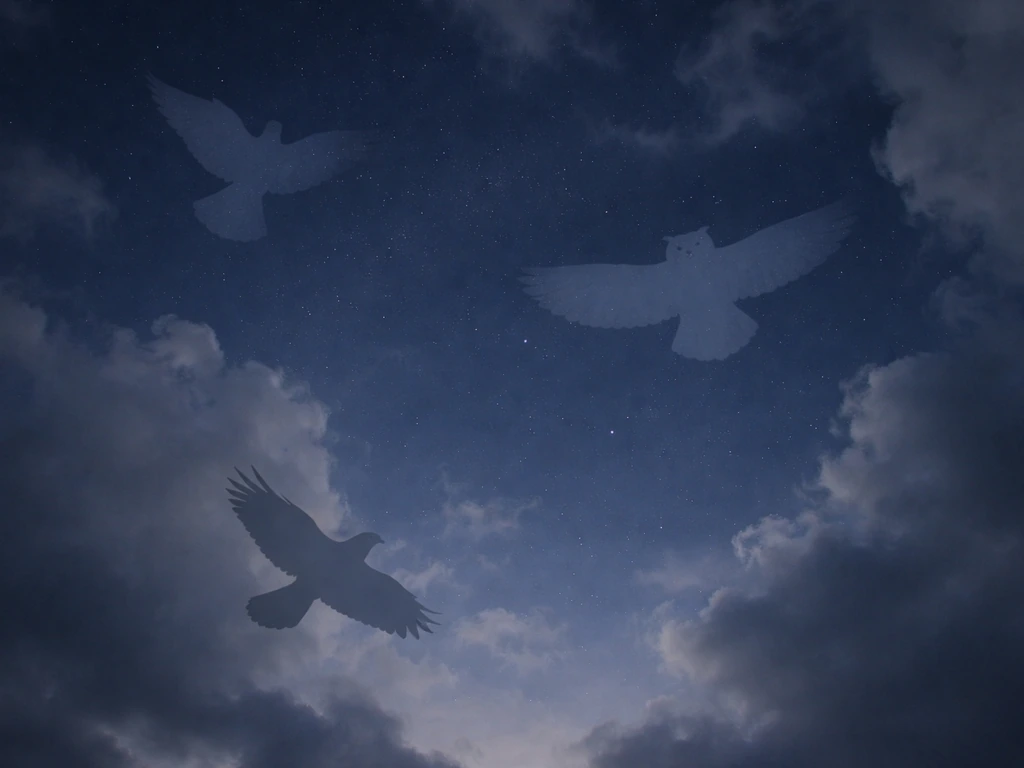
- Species: Dove usually signals peace or communication from someone passed. Owl in a dream may point to hidden knowledge or anxiety about something you know but haven't faced. Crow can indicate transformation or a warning about deception.
- Action: A bird flying freely suggests freedom, potential, or liberation. A bird caged may reflect feeling trapped or controlled. A bird attacking you can reflect an external threat or internal conflict. A bird landing on you is often interpreted as a direct personal message or connection.
- Emotional tone: How you felt during the dream matters as much as what you saw. Fear changes a 'free bird' dream significantly. Comfort or wonder suggests the symbolism is affirming.
- Location: A bird in your childhood home may connect to memory or family. A bird near a body of water links to emotional processing. A bird in your workplace may reflect ambitions or stress.
- Your role: Were you the bird, watching it, or receiving it as a gift? Each shifts the interpretation meaningfully.
Psychoanalytic approaches, including Freudian and Jungian frameworks, both emphasize that the same dream image means different things to different people. Universal symbol lists are starting points, not final answers. Your personal associations with a bird species matter as much as cultural tradition.
Superstitions and omens involving birds and women
Bird-related superstitions aimed specifically at women are widespread across cultures and centuries. Here are some of the most common ones, along with an honest look at where they come from and how to evaluate them.
| Superstition | Origin/Tradition | Fact-check / Notes |
|---|---|---|
| A bird hitting your window means death or bad news | European and American folk tradition | Behaviorally explained by glass reflection (USFWS, Audubon). Not predictive. Coincidental timing drives confirmation bias. |
| A dove nesting near a pregnant woman's home signals a healthy birth | Mediterranean and Middle Eastern folklore | No scientific basis. Doves nest based on shelter availability, not household events. |
| An owl calling a woman's name (or calling near her home at night) is a death omen | Multiple Native American traditions, also European | Highly variable across cultures. Pawnee viewed owls as protectors. Owls call at night because they are nocturnal hunters, not messengers. |
| A single crow seen by a woman means sorrow; two crows mean joy | British and Irish counting rhymes ('one for sorrow, two for joy') | Recorded folklore, not predictive. Crow appearance is determined by habitat and season, not personal circumstances. |
| A bird landing on a woman's head or shoulder is a special sign or blessing | Pan-cultural folk belief | Birds land on people when they are still and non-threatening, or when food is associated with that person. Meaningful? Possibly personally. Predictive? No evidence. |
The honest way to evaluate any bird superstition is to ask two things: first, is there a behavioral explanation for what the bird is doing? Second, does this tradition come from a culture I have a genuine connection to, or am I borrowing it without context? Neither of those questions makes the superstition 'wrong' as a personal meaning-making tool, but they do keep you from being spooked by a crow that just wants your lunch.
How to actually figure out what the bird means for you
Practical next steps matter here, because 'bird meaning woman' leads people down very different paths depending on their situation. Here's a straightforward process for getting to a useful answer. If you want to go deeper into the spiritual and mythological side of bird meaning, that part of the guide has the key bird traditions and what they tend to symbolize for women.
- Identify the bird: Before you can assign meaning, know what you're working with. Audubon and Cornell Lab recommend noting size and shape, color patterns, behavior, call, and habitat all at once rather than relying on a single feature. A photo helps, and apps like Merlin (Cornell Lab) can identify from a description or sound.
- Note the full context: When did you see it, where, and what was happening in your life at the time? Missouri Department of Conservation suggests jotting down behavioral notes immediately. This is useful whether you're trying to explain a window strike or interpret a spiritual encounter.
- Decide your interpretive frame: Are you approaching this scientifically (behavior and biology), culturally/spiritually (symbolic and mythological), through dream analysis, or trying to decode slang? You don't have to pick just one, but being clear about which frame you're in stops you from conflating a bird's natural behavior with a supernatural message.
- Cross-check the cultural tradition: If you're using folklore or spiritual symbolism, try to trace it to a specific tradition rather than assuming it's universal. Dove symbolism in Christian contexts is different from dove symbolism in Mesopotamian contexts. Owl meanings vary enormously by tribe and region.
- Check the sibling questions: If your question is specifically about a woman who nurtures or protects birds, the bird lady meaning or bird mom meaning angles might be more directly relevant. If you dreamed of a woman who was part bird or transformed into one, the bird woman meaning exploration goes deeper into mythology and archetype.
- Decide what to do with the meaning: Symbolic meanings are most useful when they connect to something real in your life. If a dove near your home feels like a message of peace at a hard time, let it be that. If a bird hit your window and you're anxious about it, fix the window with external pattern markers (USGS recommends a grid with lines no more than 2 inches apart) and let the behavior have a behavioral solution.
The most grounded approach to 'bird meaning woman' is to treat the bird, the woman, and the context as three separate variables. blank" rel="noopener noreferrer">Get the bird ID right. Know which lens you're using (symbolic, slang, dream, or behavioral). And resist the urge to merge all four into one answer, because each one is genuinely useful in its own lane.
FAQ
If someone calls a woman a “bird” in the UK, is it always affectionate?
Not always. “Bird” can be affectionate, casual, or dismissive depending on tone, who is speaking (friends vs. strangers), and the sentence structure. If the wording sounds like an insult, sarcasm, or a put-down, treat it as negative slang rather than a neutral nickname.
How can I tell whether “bird meaning woman” is about slang or about spirituality when I see it online?
Check the surrounding cues. If the post discusses dating, teasing, “red flags,” or how someone acts, it is likely slang. If it mentions omens, repeating sightings near the home, goddesses, or symbolic “signs,” it is probably the spiritual or folklore lens.
What should I focus on in a dream with birds if I want the most accurate interpretation?
Focus on the bird’s condition (healthy vs. injured or dead), movement (flying toward you, flying away, trapped, singing), and your emotional reaction in the dream. “Positive” bird imagery can turn negative if you feel fear or grief, and “negative” imagery can be reassuring if you wake feeling calm.
Does a dead bird in a dream always mean bad luck for a woman?
No. In most frameworks, a dead bird points more to endings, losses, or a transition closing than to literal bad luck. A more useful next step is to ask what life chapter you were emotionally closing around the time of the dream, then see whether the bird image fits that theme.
If a bird keeps coming back to my window, how do I decide whether to treat it as a sign or a safety issue?
Use the simplest test first. If it happens mainly during certain lighting conditions (early morning, sunset, windy days) or with certain windows, it is likely reflection-related. If you have already tried window decals or tape grids and the behavior persists for weeks, you can still treat it as meaningful, but also consider reducing attractants like feeders near that window.
Do birds nesting near a woman always signal fertility or blessing?
Usually it signals habitat. Nesting is most often about shelter, food, and protection from predators. If you want to keep the folklore meaning, frame it as a personal interpretation, not a guarantee, especially if the bird is a species known for nesting close to human structures.
Are crows outside a woman’s home always an omen of death?
No. Crow symbolism varies widely by culture, and even within cultures, local tradition matters. Practically, a crow may be investigating routines or food sources. If you are anxious, try the behavioral angle first: check nearby trash, pet food, or feeders, then decide whether the omen interpretation helps you or just increases worry.
What does “bird meaning woman” mean for identity or labels, like “bird mom” or “bird woman”?
Treat it as language usage rather than a fixed identity truth. Slang can change fast across platforms, and different communities may use it differently. The safest approach is to interpret the label based on context (tone, relationship dynamics, and what the speaker is trying to communicate).
Is it possible that the same event can fit multiple lenses at once?
Yes, and the article’s “three variables” approach helps. For example, a bird hitting a window has a physical explanation, but you can still experience it as a personal message. The key caveat is to avoid letting the spiritual reading override basic safety and environmental fixes.
What is a practical way to avoid confirmation bias when interpreting repeated bird sightings?
Keep a short log for 7 to 14 days: species, location on your property, time of day, weather, and what you were doing. Patterns that correlate with feeding, landscaping, or commuting routes are usually behavioral. Symbolic meanings are most useful when you notice a consistent theme that matches your real-life concerns and emotions, not just random frequency.
If I want the “right” interpretation, do I need to know the exact bird species?
It helps a lot. Species affect folklore associations, dream imagery, and practical explanations (for example, corvid intelligence vs. migratory songbirds). If you cannot identify the bird, start with observable traits (size, color, beak shape, behavior), then decide which lens you can answer reliably without perfect identification.
Bird Woman Meaning: Dreams, Slang, Spiritual Symbolism
Discover bird woman meaning in slang, dreams, and spirituality, plus how to disambiguate your experience and take next s