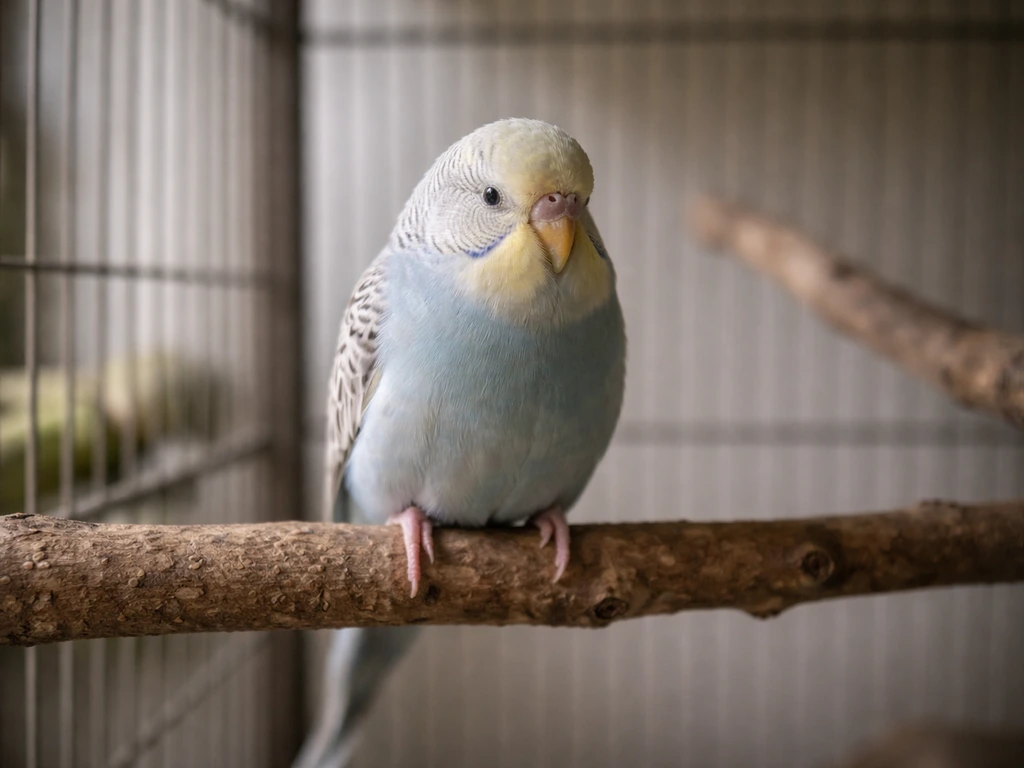
A bird skull most commonly carries meanings tied to transformation, mortality, and the liminal space between life and death. In many cases, people also ask what bird carcass meaning is, and how that changes depending on context and the species involved bird skull meaning. But the honest answer is that the meaning depends almost entirely on context: which bird, how the skull is being used, where it came from, and what cultural or spiritual tradition (if any) it's connected to. Bird sacrifice meaning is another context-dependent interpretation, so it helps to consider the species, purpose, and cultural tradition involved. There is no single universal message. A crow skull on an altar means something different than a hawk skull in a museum case, which means something different again than a stylized bird skull mask worn at a festival.
Bird Skull Meaning: Spiritual, Native American, and Context Clues

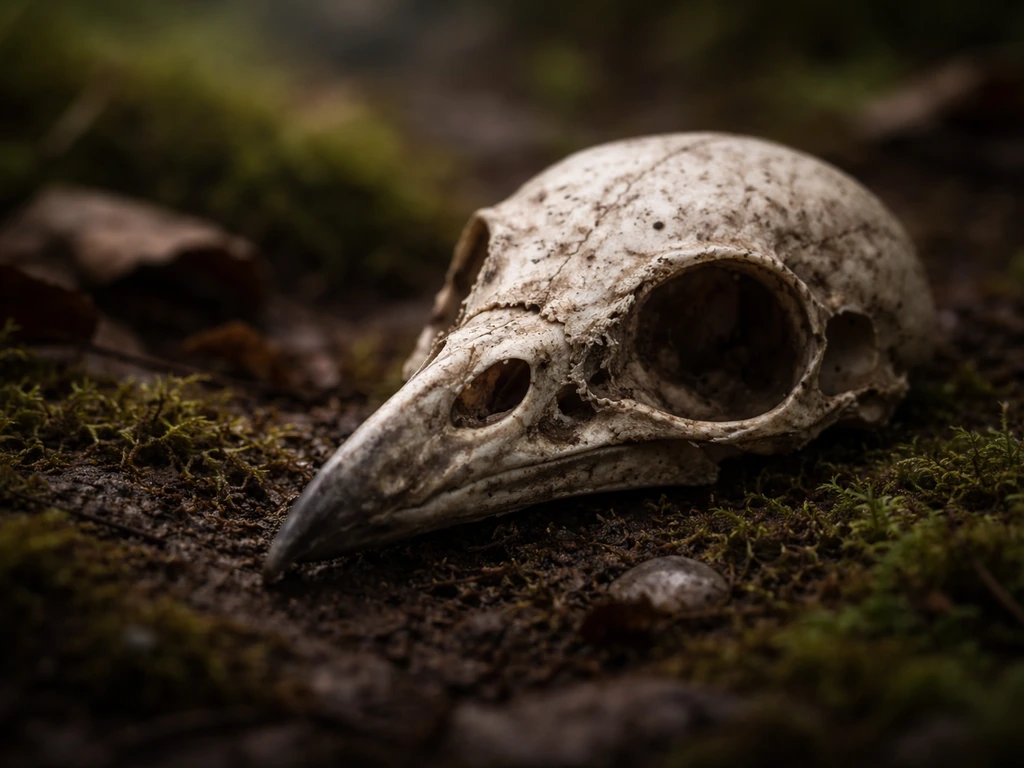
Why people search for bird skull meaning
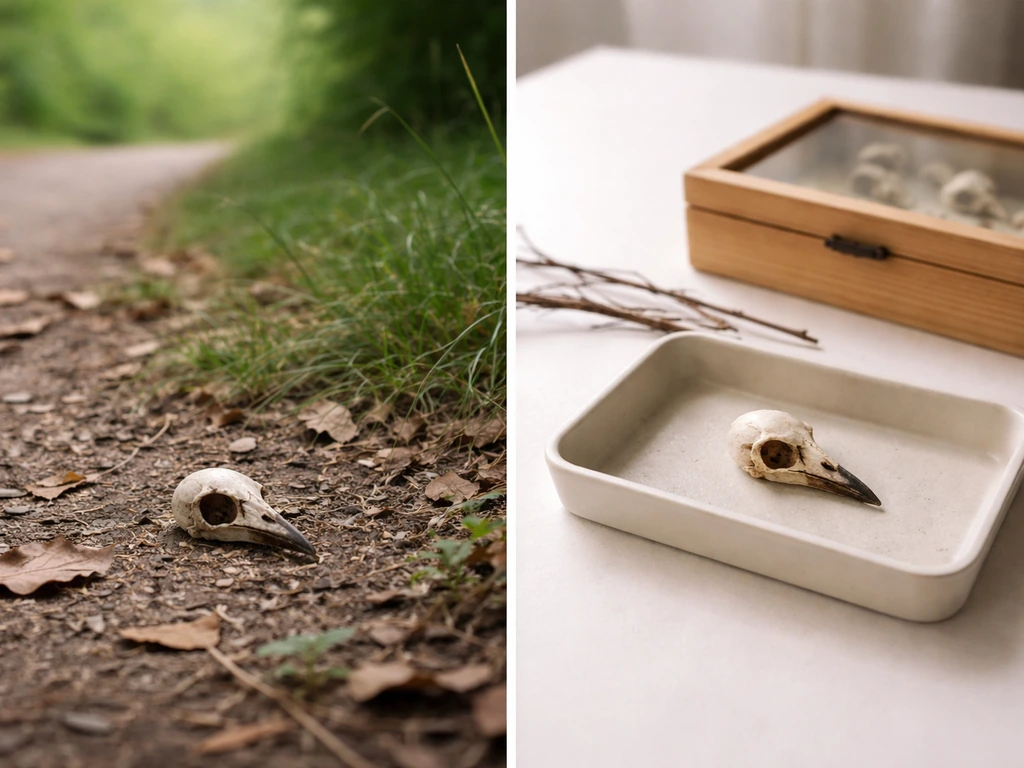
People arrive at this question from very different places. Some find an actual bird skull outdoors and wonder if it's a sign. Others own or are considering a bird skull as part of an altar, a piece of jewelry, or a decorative display. Some are researching a bird skull mask they encountered at a ceremony or want to make for a costume. And a meaningful chunk of searches come from people who've seen bird skull imagery in Native American art or ceremony and want to understand what it represents without overstepping.
All of those are legitimate starting points, and they all lead to different answers. The mistake most articles make is treating bird skull symbolism as one fixed thing. It isn't. What follows is a practical breakdown of the most common contexts, the most commonly misunderstood assumptions, and how to figure out which meaning actually applies to your situation.
Bird skull spiritual meaning: what the themes actually are
Across a wide range of spiritual and folk traditions, skulls (and bird skulls specifically) tend to cluster around a few recurring themes. None of these are fixed rules, but they're genuinely common enough to be worth understanding.
- Transformation and transition: Birds already carry strong symbolism around change and movement between worlds. A bird skull extends that into the territory of death and what comes after, often read as a symbol of the soul's journey or a completed transformation.
- Mortality and impermanence: This is the memento mori thread. Skull imagery has been used in European art, philosophy, and Catholic tradition for centuries as a reminder that life is finite. A bird skull sits in that same lineage, often deployed in art or altar work as a prompt to stay present and value what's living.
- Liminal wisdom and spirit communication: In many folk and esoteric traditions, skulls (especially of animals associated with intelligence or the spirit world, like crows or owls) are treated as vessels or focal points for communication with spirits or ancestors. The skull is seen as the seat of consciousness, even after death.
- Protection and warding: Some traditions place skulls, including bird skulls, near doorways or sacred spaces as guardians. The idea is that the spirit of the animal continues to protect the space.
- Power and predator energy: Skulls of raptors (hawks, eagles, owls) are sometimes used in ceremonial or folk contexts to channel the qualities associated with that bird: sharp vision, speed, predatory strength.
The species matters a lot here. A hummingbird skull carries very different symbolic weight than a vulture skull. If you're working in a specific spiritual tradition, that tradition's relationship with the particular bird species should guide your interpretation far more than any generic 'bird skull = death/transformation' shortcut.
Bird skull mask meaning: when the skull is worn or displayed
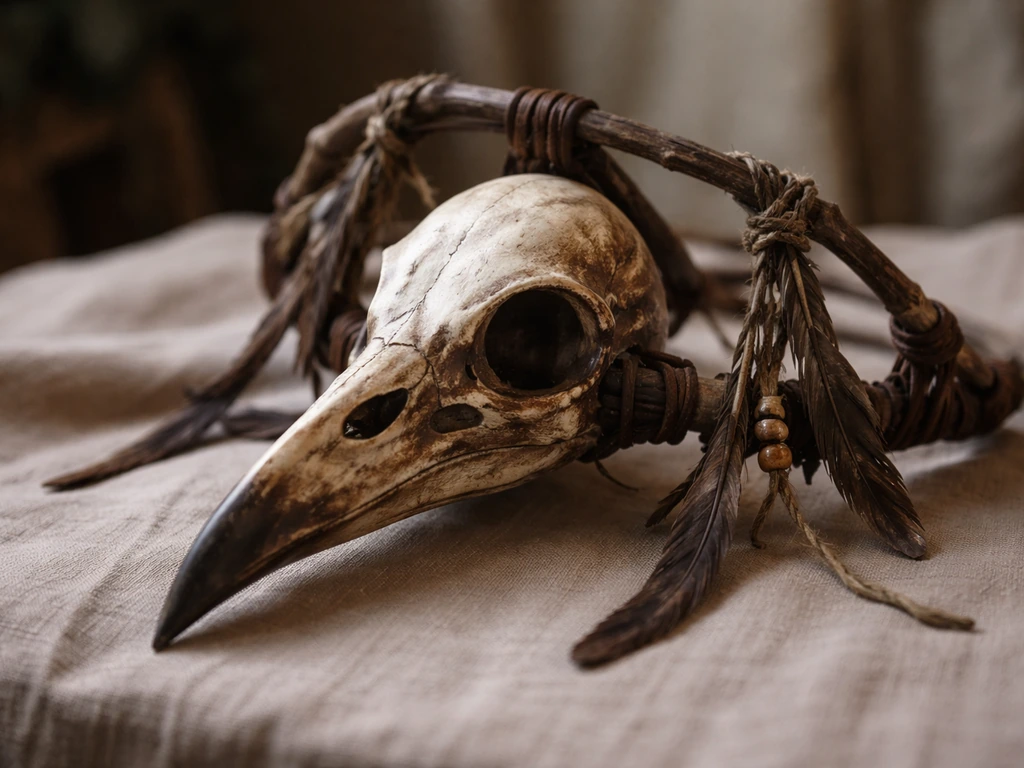
Wearing a bird skull mask, or displaying one, shifts the meaning in an important way. You're no longer just contemplating the symbol. You're embodying it, or presenting it as a focal point for an audience. That changes things.
In ceremonial contexts across many cultures, wearing an animal mask is understood as a form of ritual identity shift. You're not 'pretending' to be the bird; in the logic of the tradition, you're allowing the bird's essence or spirit to work through you. Museum collections document bird masks as serious art objects with traceable provenance and cultural context, which is a reminder that these aren't generically interchangeable symbols. A bird skull mask from one tradition might represent a death deity, while a similar-looking mask from another tradition represents a healer or sky messenger.
Outside of specific ceremonial contexts, bird skull masks appear in costume culture, gothic and alternative aesthetics, and Halloween or festival wear. Here the meaning is usually more personal and aesthetic: a statement about the wearer's relationship with mortality, nature, or a particular bird archetype. That's a legitimate use of the imagery, but it's worth being honest with yourself about whether the mask you're wearing has roots in a specific living tradition. If it does, wearing it casually can cause real harm to the people whose tradition it came from.
Native American bird skull meaning: how to think about it respectfully
This is the area that requires the most care, because it's also the area most prone to oversimplification and appropriation. The phrase 'Native American bird skull meaning' gets searched a lot, and the honest answer is: there isn't one. There are hundreds of distinct Native American nations, each with their own cosmologies, ceremonies, and relationships with specific bird species. Hopi ceremonialism, for example, ties bird imagery and feather elements to named ceremonies and specific roles within those ceremonies. That's not a system you can extract a single skull symbol from and apply universally.
A few things worth knowing for respectful engagement. First, many ceremonial objects involving bird parts are sacred and not meant for outside interpretation at all. The meaning isn't 'hidden' and waiting to be decoded by researchers; it belongs to the community and is transmitted through relationship and ceremony. Second, actual bird skull objects that originated in Native American ceremonial contexts may fall under legal protection. The Native American Graves Protection and Repatriation Act (NAGPRA) governs the handling and return of Native American human remains and associated funerary objects held by museums and federal agencies, and 'culturally affiliated' determinations matter enormously in how those objects are treated.
Third, and practically: if you've acquired something that might have ceremonial origins, the right move is to consult with representatives of the specific nation or cultural group it may be connected to, not to look up a generic meaning online. That's not gatekeeping; it's just accurate. The symbolism is embedded in relationships and traditions, not universally decodable from the object itself.
What you can reasonably say is that birds hold significant and varied spiritual meaning across many Indigenous American traditions, often connected to sky, spirit, messenger roles, and specific ceremonial purposes. Beyond that, the specifics belong to the specific nations and communities.
How to identify the right meaning for your specific situation
The most useful thing you can do is narrow down the context before trying to assign meaning. Here's a practical framework.
Start with the species, if you can identify it
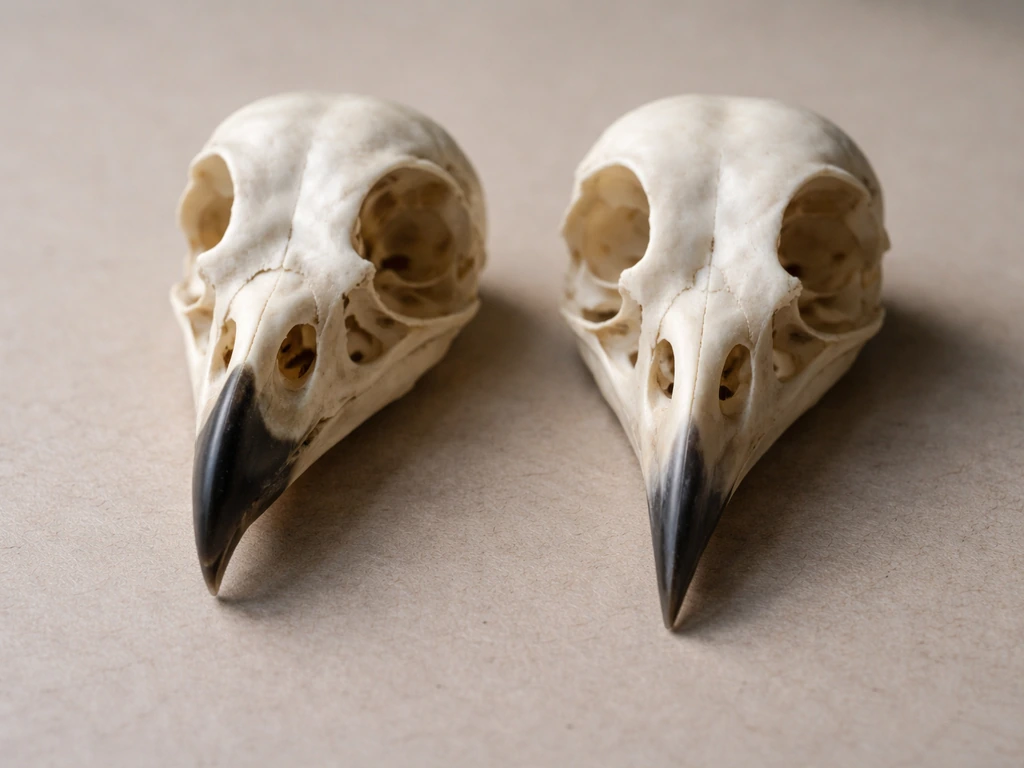
Beak morphology is your best tool for identifying a bird skull. The beak is an extension of the skull itself, and its shape is strongly diagnostic: a hooked raptor beak looks nothing like a long thin shorebird beak or a heavy seed-cracker finch beak. Size, the shape of the eye sockets, and the nasal cavity can help narrow things down further. If you want to be precise, compare the skull against documented reference specimens. The U.S. Fish and Wildlife Service notes that definitive identification usually requires a qualified expert, so for any legal or serious cultural question, don't rely on casual online ID alone.
Then work through these questions
- Where did this skull come from? Found in nature, purchased from a dealer, inherited, received as a gift, or part of a ceremonial object?
- Is it connected to a specific tradition, community, or spiritual practice? If so, which one specifically?
- How is it being used or displayed? On an altar, as wearable art, as home decor, or as part of a ceremony?
- What species is it, or what species does it represent? The meaning changes with the bird.
- Who gave you information about its meaning, and do they have genuine knowledge of the tradition you're associating it with?
These questions don't give you an automatic answer, but they rule out a lot of wrong answers fast. A crow skull you found on a forest trail has almost nothing in common, symbolically, with a ceremonial hawk skull mask from a specific cultural tradition. Treat them differently.
Common misconceptions worth clearing up
| The misconception | What's actually true |
|---|---|
| Bird skulls always mean death or bad luck | Skull imagery spans protection, transformation, wisdom, and memento mori philosophy. 'Death' is one thread, not the only one, and even the death association is usually about accepting mortality, not predicting disaster. |
| There's one Native American meaning for bird skulls | There are hundreds of distinct Indigenous nations with their own traditions. No single pan-Indigenous meaning exists, and assuming one flattens genuine cultural complexity. |
| A bird skull mask always has ceremonial significance | Many bird skull masks are art objects, costume pieces, or aesthetic statements with no ceremonial origin. Context and provenance determine this, not appearance alone. |
| Finding a bird skull is automatically a spiritual sign or omen | Sometimes a bird skull is just a bird skull. If you're drawn to interpreting it spiritually, that's valid, but there's no tradition that says all found bird skulls carry a message. |
| You can legally keep any bird skull you find | In the U.S., the Migratory Bird Treaty Act prohibits possession of parts (including skulls) of native migratory birds without a permit, regardless of how you obtained them. This applies even to naturally found specimens. |
The legal point is worth emphasizing because it's genuinely surprising to many people. If you find a dead native bird in the U.S. and keep the skull as a memento or symbolic object, you may technically be in violation of the MBTA. Permits exist for educational and research use, but casual possession without one is a legal gray area at best. That's a practical 'next step' issue, not just a symbolic one.
Practical next steps: how to respond thoughtfully
If you've made it this far, here's what I'd actually recommend doing depending on your situation.
If you found a bird skull and want to know if it's meaningful
Start by identifying the species as best you can using beak shape, size, and location. Then ask yourself whether you're in a spiritual practice or tradition that has a specific relationship with that bird. If yes, consult that tradition's guidance. If no, you're free to interpret it personally, but be aware of the legal question around possession of native migratory bird parts.
If you own or are considering a bird skull mask or art object
Research its provenance. Where was it made, by whom, and in what context? A mask made by an artist from within a tradition has a different status than a mass-produced replica. When displaying or wearing it, handle it carefully (fragile specimens deteriorate easily and some present handling hazards), and be honest with yourself and others about what it represents and where it comes from.
If you're trying to understand a bird skull in a cultural or ceremonial context
Go to primary sources: people from within that specific tradition, academic ethnographies authored in partnership with those communities, or tribal cultural offices if relevant. Don't rely on generalizations about 'shamanism' or 'Native American spirituality' as catch-all frameworks. If a ceremonial object might have origins covered by NAGPRA or equivalent cultural property protections, consult those legal frameworks and, more importantly, the communities whose heritage is involved.
If you're working with bird skull imagery in your own spiritual practice
This is where personal relationship with the symbol matters most. What does the bird mean to you, and what does its death or remains represent in your own understanding? If you are trying to interpret bird dying meaning, tie it back to the species, the context, and the tradition that shapes your interpretation. Memento mori as a philosophical practice, the idea of carrying the energy of a transformative animal, or simply honoring the life of a specific creature are all coherent personal frameworks. The key is being clear about which tradition or framework you're drawing from, and being honest when something is personal rather than traditional.
Bird skulls, bird bones, and bird remains more broadly sit at an intersection of nature, mortality, culture, and law that rewards careful thinking. The meaning is real, but it's contextual. Getting the context right is the work, and it's worth doing thoughtfully.
FAQ
How can I tell if a bird skull I found outdoors is even legal to keep in the U.S.?
Start by identifying whether the bird is a native migratory species and whether you have possession of the whole bird or only parts. In the U.S., the Migratory Bird Treaty Act can make casual possession a legal risk even if the bird was found dead. If you are not sure, contact a local wildlife agency or a knowledgeable bird-organization first, rather than relying on “I found it outside” as justification.
What should I do if I want to keep or display the skull, but it might be from a protected or culturally sensitive origin?
Treat “possibly ceremonial” and “possibly cultural property” as separate red flags. If it could be tied to a specific tradition or made for ceremonial use, prioritize contacting the related tribal cultural office or community representatives before cleaning, altering, or displaying it. Also avoid selling it or using it as a costume prop, because that can escalate legal and ethical risk.
Can I use online symbol guides to interpret a bird skull mask from a specific tradition?
You can use general themes as starting points, but avoid turning them into a guaranteed reading. Many masks have nation- or ceremony-specific meanings that are not interchangeable. If the mask appears to come from a known living tradition, the most reliable step is to ask someone within that community or consult partnered academic work that includes community context.
Is it disrespectful to wear a bird skull mask for Halloween or festivals?
It depends on the object’s origin and how it is presented. If it is an original costume with no clear traditional ties, personal aesthetic use is often lower risk. If it is clearly modeled on ceremonial material, made by artists from a specific nation, or resembles identifiable ritual regalia, casual wear can be harmful. A good rule is to check provenance and avoid reproducing “sacred look” designs as novelty.
What’s the best way to identify the bird species from the skull if the beak is broken or incomplete?
Use multiple anatomical cues, not just beak shape. Look at skull size, eye socket geometry, the nasal cavity region, and overall proportions. If key features are missing, identification becomes uncertain, so for anything with legal or cultural stakes you should get an expert ID or compare with reference specimens rather than guessing from photos.
How do I distinguish between “death symbolism” and “transformation” when interpreting a bird skull?
Ask what the object is doing in your situation. If you are using it as a memorial or memento, the death emphasis is likely strongest. If the bird is tied to a life-change practice (for example, a personal rite of passage, honoring a migratory return, or a transformation theme in your own belief system), then “transformation” may be the better fit. When it’s unclear, focus on the species’s natural behavior and your stated purpose for using the symbol.
Does the meaning change if the skull is found on the ground versus displayed on an altar?
Yes, strongly. Finding something outdoors often leads people toward sign-based or reflective interpretations. Displaying it on an altar shifts the role from observation to intentional focal practice, which can change the interpretation from “what this might mean” to “what this is meant to support.” The setting also affects how other people may perceive your intent.
What if the bird skull I have is from an obvious raptor, but I do not know the exact species?
In many cases, raptor skulls cue broadly similar themes (predation, sky/soaring associations, power and vigilance), but species-level differences still matter. If you cannot confidently ID the species, keep your interpretation at a general level and avoid claiming a specific tradition link. For serious cultural or legal decisions, confirm the species before making further claims.
Is cleaning, bleaching, or preserving a bird skull likely to create ethical or legal problems?
It can. Cleaning can destroy provenance clues (where it came from, what it was originally used for) and can also damage fragile specimens. If there is any chance the skull is tied to protected species or cultural property, preservation should be handled carefully and ideally after confirming the situation with the appropriate authorities or community representatives.
If I’m trying to interpret a bird skull image in art, how should I adjust compared to owning a real skull?
Art imagery is often symbolic rather than literal. A drawing, print, or stylized mask may compress multiple meanings, so species accuracy and origin details may be less direct than with a real specimen. The best approach is to look for artist statements, commission context, and cultural attribution, and treat the image as an interpretation created by someone else rather than a universally decodable sign.
Bird Blindness Meaning: Causes, Signs, and What to Do Now
Bird blindness meaning: spot signs, tell vision loss from other issues, and take safe action or get urgent vet care.