
In military usage, a 'bird dog' is a forward observer or spotter whose job is to find targets, watch enemy movement, and direct fire onto those targets. The role can belong to a ground-based soldier calling in artillery, or to a pilot flying a small aircraft overhead who identifies targets and guides air strikes or artillery adjustment. Either way, the core job is the same: locate, observe, and direct.
Bird Dog Meaning in Military: Role, Training, and Context

Marcus Holloway
25 Apr 2026
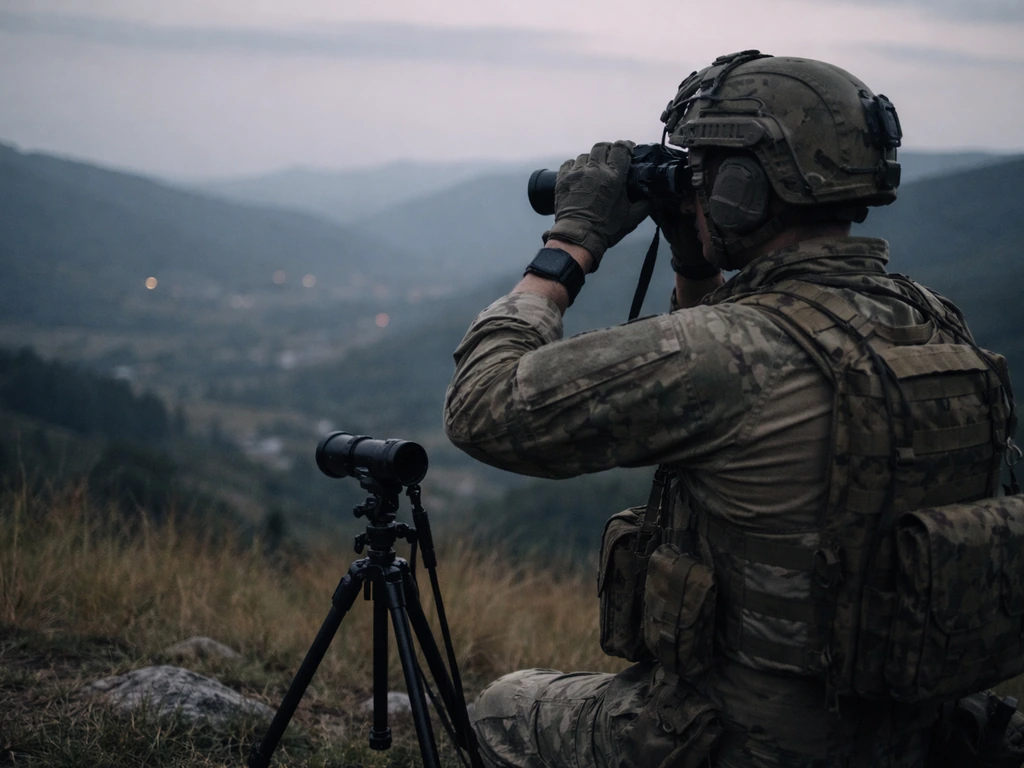
What 'bird dog' actually means in military context
The phrase borrows directly from hunting. The phrase borrows directly from hunting bird dog expression meaning. A bird dog in the field flushes out game and holds position so the hunter can take the shot. Militaries adopted that image almost literally. A military bird dog spots the enemy, fixes their position, and enables someone else (artillery, aircraft, a strike team) to deliver the hit. The bird dog is not the weapon. The bird dog is the eyes and the guide.
In U.S. doctrine, this role aligns closely with what field manuals call the forward observer (FO). FM 6-20 from 1944 already described field artillery close support as depending primarily on forward observers. The Marine Corps manual MCWP 3-16.4 defines the FO mission as detecting and locating suitable indirect-fire targets, then 'bringing fires on them' by transmitting a call for fire and adjusting rounds until the target is hit. When someone in a military conversation calls a soldier a bird dog, that forward observer function is almost always what they mean.
The term also attaches to a specific aircraft: the Cessna L-19, officially designated the O-1 Bird Dog. The Army purchased it as a liaison and observation platform, and it served through Korea and Vietnam doing exactly what the name implies. So 'bird dog' in military writing can refer to the human role, the aircraft, or both at once depending on context.
What a bird dog actually does in the field
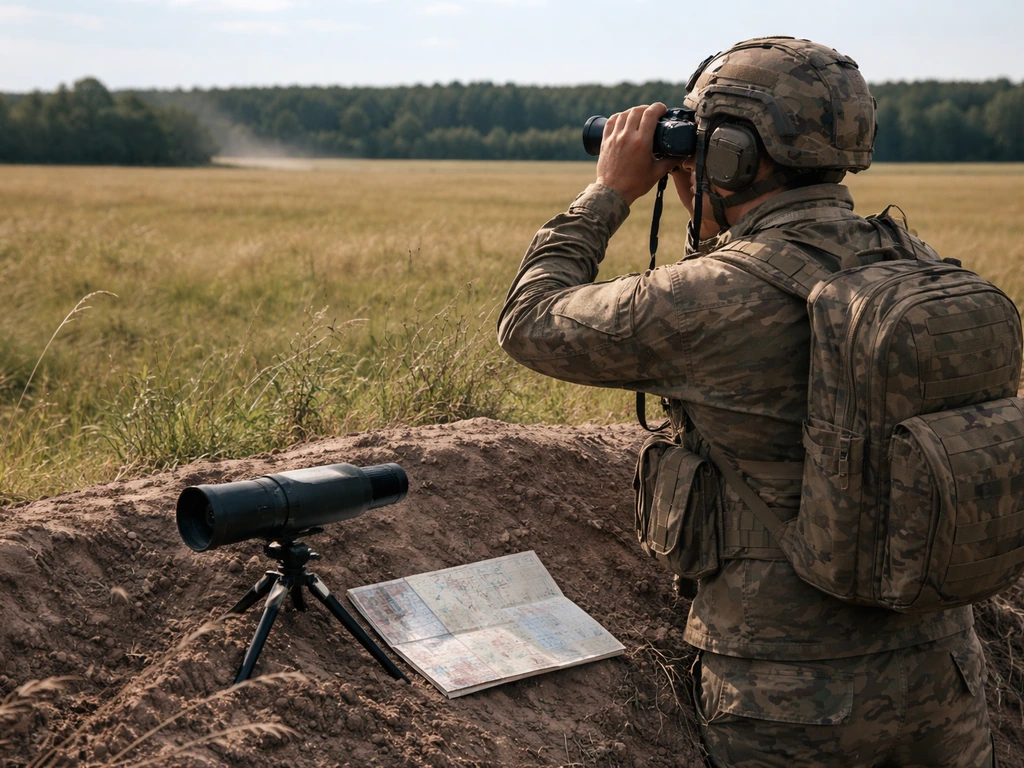
The job breaks down into a few core tasks that stay consistent whether you're talking about a ground FO or an airborne observer.
Spotting and locating
The bird dog moves to (or flies over) a vantage point where they can observe the enemy. On the ground, that might be a hilltop or a tree line. In the air, the O-1 Bird Dog would orbit overhead at low altitude, watching enemy troop movement, vehicle columns, or supply routes. The observer's first job is to find something worth hitting and pin down its exact location.
Calling and adjusting fire
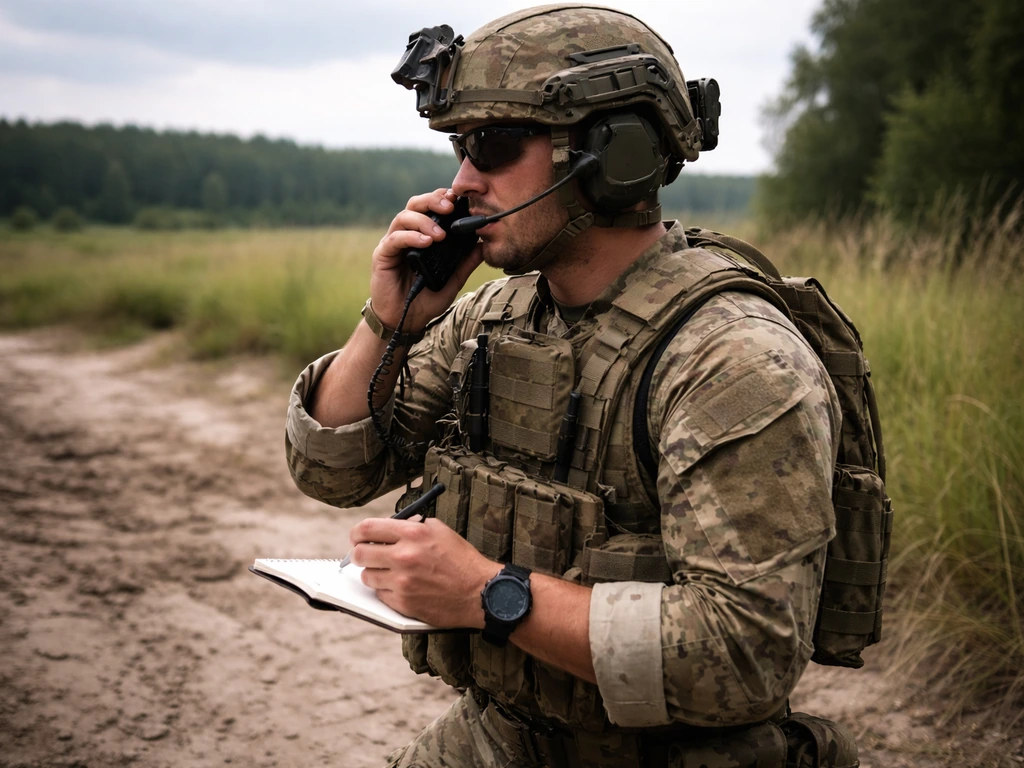
Once a target is identified, the bird dog transmits a call for fire to an artillery battery or strike aircraft. They describe the target, give grid coordinates, and then watch where the first rounds land. If the rounds are off, the observer radios corrections (left 200, add 100, for example) until the fire is on target. FM 6-40 describes this observer duty as seeing the target, directing fire, and reporting. In Vietnam, the O-1's pilot would mark a target with smoke rockets so that fast-moving strike aircraft knew exactly where to drop ordnance.
Forward air control
During Vietnam, U.S. rules of engagement required that ground-attack strikes be directed by a forward air controller (FAC). The O-1 Bird Dog became the first dedicated FAC aircraft in Vietnam, according to Air and Space Forces Magazine. The pilot would loiter over the target area, keep eyes on the enemy, and talk strike aircraft onto the target in real time. This is bird dogging at its most literal: orbiting overhead to hold the target until the shooter arrives.
Reconnaissance and radio relay
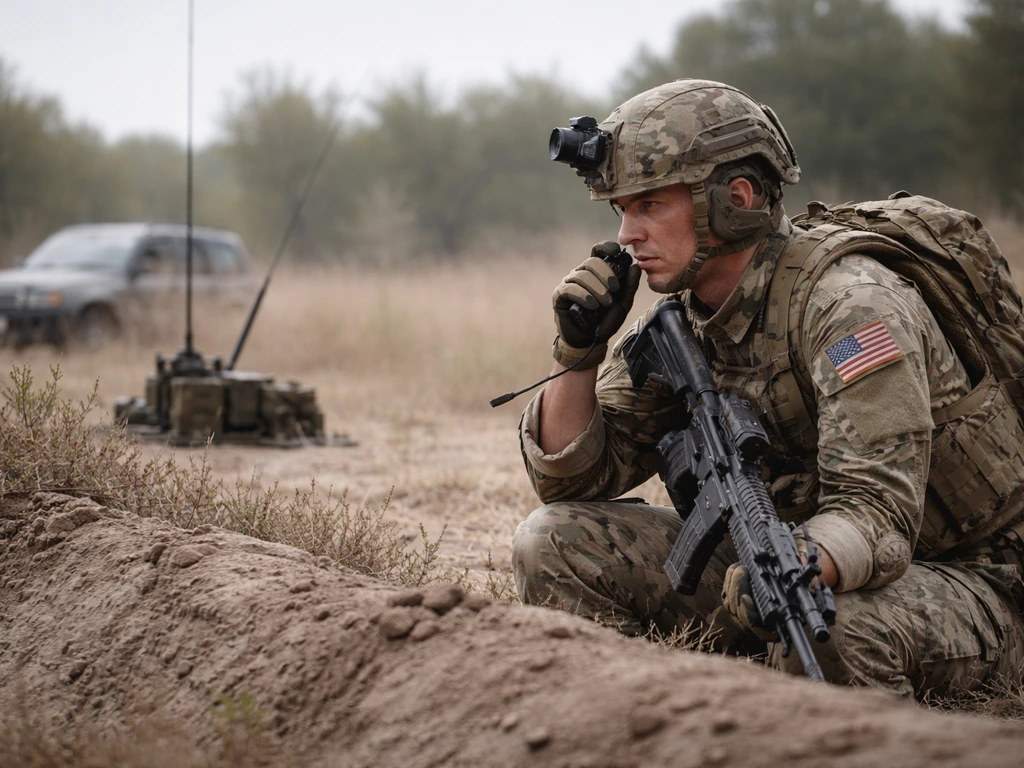
The role also included continuous surveillance of enemy movement and serving as a radio relay between ground units and supporting arms when terrain blocked direct communication. The Hurlburt Field fact sheet for the O-1E lists reconnaissance, target acquisition, artillery adjustment, radio relay, and convoy escort as its primary Vietnam missions. A bird dog in any of these modes is still fundamentally doing the same thing: extending the reach and awareness of larger combat units.
Training and qualifications for the role
Ground bird dogs (forward observers) typically come from combat arms specialties, specifically field artillery, infantry, or joint fires. In the U.S. military, becoming a qualified FO involves formal schooling in fire support coordination, map reading, target location methods, radio procedures, and call-for-fire formats. A joint terminal attack controller (JTAC), who directs air strikes, requires additional and more intensive certification because the stakes of misidentifying a target to a fast jet are so high.
Airborne bird dogs (the O-1 era FAC pilots) needed their standard military aviation qualifications plus specialized training in low-and-slow observation flying, target marking with smoke rockets, and the communication procedures for talking strike aircraft onto a target. The combination of stick-and-rudder skill with fires coordination knowledge was the defining feature of that job.
In modern joint fires doctrine, the term 'forward observer' or 'JTAC' has mostly replaced 'bird dog' in formal writing, but the underlying qualifications map directly to what historical uses of the term described.
How this meaning differs from other 'bird dog' uses
The phrase 'bird dog' shows up in several completely unrelated contexts, and it's easy to get crossed up if you're reading quickly. Here's how the military meaning differs from the others.
| Context | What 'bird dog' means | How to spot it |
|---|---|---|
| Military | Forward observer, spotter, or FAC who locates targets and directs fire | Surrounded by terms like artillery, fire support, FAC, FO, strike, observer, or aircraft designation O-1/L-19 |
| Hunting | A breed or trained dog that flushes and retrieves birds for a hunter | References to dogs, hunting, breeds, retrieving, or field trials |
| Sales / real estate | A person who scouts and refers leads or deals to a buyer or agent for a fee | References to referral fees, commissions, leads, or real estate deals |
| General slang | To closely follow, shadow, or pursue someone | Informal speech about following a person; often used as a verb |
| Fitness | A floor exercise involving opposite arm and leg extension from all fours | References to core exercise, stability, yoga, or physical therapy |
The military meaning is almost always signaled by surrounding vocabulary. If you see 'bird dog' near words like artillery, fire mission, FAC, forward observer, strike aircraft, or target acquisition, you're in the right lane. If it appears in a conversation about closing deals or referral payments, that's the sales usage (which shares the same scouting-and-finding logic, by the way, just in a commercial setting). In real estate, the “bird dog” meaning is different and refers to someone who scouts opportunities and connects buyers or investors with properties bird dog meaning in real estate.
In sales, the “bird dog meaning” is tied to scouting potential opportunities and pointing them to a closer who can take the deal forward bird dog meaning in sales. In sales, the “bird dog meaning” usually refers to scouting prospects, spotting buying signals, and guiding opportunities to the right closer. The sales usage (which shares the same scouting-and-finding logic, by the way, just in a commercial setting) bird dog fee meaning.
In slang, a bird dog is someone who scouts, finds leads, or brings attention to potential opportunities bird dog definition slang. In slang, the phrase "bird dog" is used to describe someone who scouts, finds leads, and brings attention to potential opportunities bird dog definition slang. The sales and real estate meanings are worth understanding separately from the military one because they're genuinely common in everyday business talk. In real estate, people often use “bird dog meaning in real estate” to describe someone who scouts for leads and helps connect buyers and sellers.
Where the phrase shows up: history and modern use
World War II and Korea
The forward observer role predates the specific nickname, but the language of 'bird dogging' a target was already in informal military use by World War II. FM 6-20 from 1944 laid out the forward observer doctrine that the nickname describes. In Korea, the Cessna L-19 was formally named the Bird Dog by the Army, cementing the connection between the aircraft, the role, and the phrase.
Vietnam: peak use of the term
Vietnam is where 'bird dog' appears most heavily in historical writing. The O-1 Bird Dog flew thousands of missions as the primary FAC platform in the early years of U.S. involvement. Historical accounts describe pilots orbiting over enemy positions, marking targets with white phosphorus rockets, and talking in strike aircraft for air-to-ground attacks. Australian military journals, U.S. Air Force fact sheets, and unit histories from 1966 to 1972 all use 'bird dog' to describe both the aircraft and the function. When you read Vietnam-era accounts and see 'bird dog,' it almost certainly refers to either the O-1 aircraft or the FAC/spotter role that aircraft performed.
Modern doctrine and current usage
Today's field manuals use forward observer, JTAC, or joint fires observer as the formal terms. The casual use of 'bird dog' still shows up in informal military speech, unit histories, and journalism covering artillery or air support operations. In many articles and discussions, the bird dog method describes this same spotting-to-directing workflow used by forward observers and air controllers. When Army.mil articles describe the FO's job as coordinating indirect and air support fire from a vantage point, they're describing the same mission the nickname has always pointed to. The phrase is not obsolete; it just lives more in informal and historical registers than in current doctrine.
How to tell which meaning applies when you read the term
The fastest way to disambiguate is to look at the three or four words directly around 'bird dog' in your source. Military context will almost always include at least one of the following: a unit type (artillery, infantry, air force), a function (fires, targeting, reconnaissance, observation), or a specific platform reference (O-1, L-19, FAC, FO). If your source is talking about the term in a sports or training context rather than doctrine, the bird dog exercise meaning is the adjacent way people use the phrase today. If none of those appear, you're probably not looking at the military meaning.
- Check the source type: a field manual, military history book, or unit after-action report almost guarantees the military meaning.
- Look for fire support vocabulary: 'call for fire,' 'adjust,' 'on target,' 'smoke,' 'mark,' 'FAC,' or 'FO' are strong signals.
- Check for the aircraft reference: 'O-1,' 'L-19,' 'Cessna,' or 'Bird Dog aircraft' means you're reading about the airborne spotter platform specifically.
- If the text is about business, real estate, or referral fees, that's an entirely different usage covered in the context of sales and real estate bird dogging.
- If the text is about physical fitness or exercise, that's a core stability move and has nothing to do with military roles.
If you want to go deeper on the military usage specifically, the most productive search terms are 'forward observer doctrine,' 'joint fires observer,' 'JTAC,' 'O-1 Bird Dog Vietnam,' and 'forward air controller history.' Those will surface the primary source manuals and historical accounts that give the fullest picture of what bird dogs actually did in the field and how the role evolved from World War II through current joint fires practice.
FAQ
Is a bird dog the same thing as a forward air controller (FAC) or a JTAC?
They are closely related but not identical. In practice, bird dog is a nickname for the observer function, while FAC and JTAC are formal air-to-ground roles with specific command and certification requirements. If a source mentions JTAC, it usually implies current joint terminal attack procedures, whereas bird dog or O-1 typically refers to the historical airborne observer and target-marking workflow.
What does a bird dog actually do when they cannot get precise coordinates?
A bird dog will fall back to procedural target location methods, approximate grid references, and detailed descriptive location cues (orientation, distance, recognizable terrain features). They then adjust fire based on observed impacts or marking effects, so accuracy comes from iterative corrections rather than perfect initial coordinates.
Can a bird dog be in radio contact with the shooter the whole time?
Not always. The observer may be the only one who can see the target, but terrain, range, or radio limitations can force the bird dog to use relay methods or indirect communications. That is why the O-1 missions included radio relay, and why ground observers rely on established fire support and call-for-fire networks.
Is the bird dog responsible for confirming the target is actually the right one?
The bird dog’s job is to detect, locate, and keep the fire solution updated, but final confirmation and authorization standards depend on the unit and time period. In modern doctrine, the observer must follow restrictive identification and deconfliction procedures and report changes promptly, but the framework for “who decides” varies across operations.
Does “bird dog” always mean airborne, or can it be strictly ground-based?
It can be either. “Bird dog” can refer to a ground forward observer calling for artillery or adjustment, or it can refer to the O-1 Bird Dog aircraft and its airborne forward air controller role. Many accounts use the term loosely for both at once, so you need the surrounding words like FO, FAC, artillery, or O-1 to tell which is intended.
How is bird dogging different from artillery targeting without an observer?
Without an observer, fires are typically placed using preplanned coordinates, map data, or sensor inputs that do not include continuous visual confirmation. A bird dog improves effectiveness by allowing real-time observation, target fixing, and on-the-fly adjustment based on where rounds land or based on target marking.
In Vietnam-era stories, what do they mean by target marking and why does the bird dog mark?
Marking (for example, smoke rockets) gives the strike aircraft a stable, visible reference in a dynamic environment. The bird dog marks to maintain target reference while aircraft close in and so that multiple aircraft can align their delivery on the same point even if visibility or enemy movement changes.
What are common misunderstandings when people read “bird dog” in military articles?
The biggest mistake is assuming it is a weapon or a standalone unit. Another common error is treating it as purely airborne in all eras. The term is better understood as a function (eyes, location, guidance, and corrections) that may be performed by a person, by an aircraft crew, or by both depending on the context.
If I see “bird dogging” in a training or sports context, how do I avoid mixing it with the military meaning?
Use the surrounding topic words. If the source is about recruiting, sales leads, referral fees, or exercises, it is usually using the scouting-and-spotting idea metaphorically. Military references typically cluster around fire missions, targeting, observation, FO, FAC, JTAC, or aircraft like the O-1/L-19.
What key terms should I search to learn “how bird dogs worked” in detail?
Search for combinations like “call for fire,” “fire support coordination,” “forward observer mission,” “joint fires observer,” and “forward air controller procedures,” plus era-specific queries such as “O-1 Bird Dog FAC Vietnam.” Those will connect the nickname to the actual procedural steps and responsibilities rather than only the general concept.
Next Article
Bird Dog Fee Meaning: What It Is and When You Pay It
Bird dog fee meaning in deals: who pays, who gets paid, when it’s owed, and how to document a valid introduction.