Sparrows most commonly symbolize simplicity, resilience, community, and the value of ordinary life. That's the short answer. If you just saw a sparrow and felt like it meant something, or if you dreamed about one and woke up wondering what your brain was trying to tell you, those themes are a solid starting point. But the full picture is more nuanced, and getting the interpretation right depends heavily on context: what the bird was doing, how you felt, and which cultural lens you're working from.
Bird Sparrow Meaning: Symbolism, Dreams, Folklore Explained

Marcus Holloway
2 Apr 2026
What sparrows usually symbolize (the quick version)
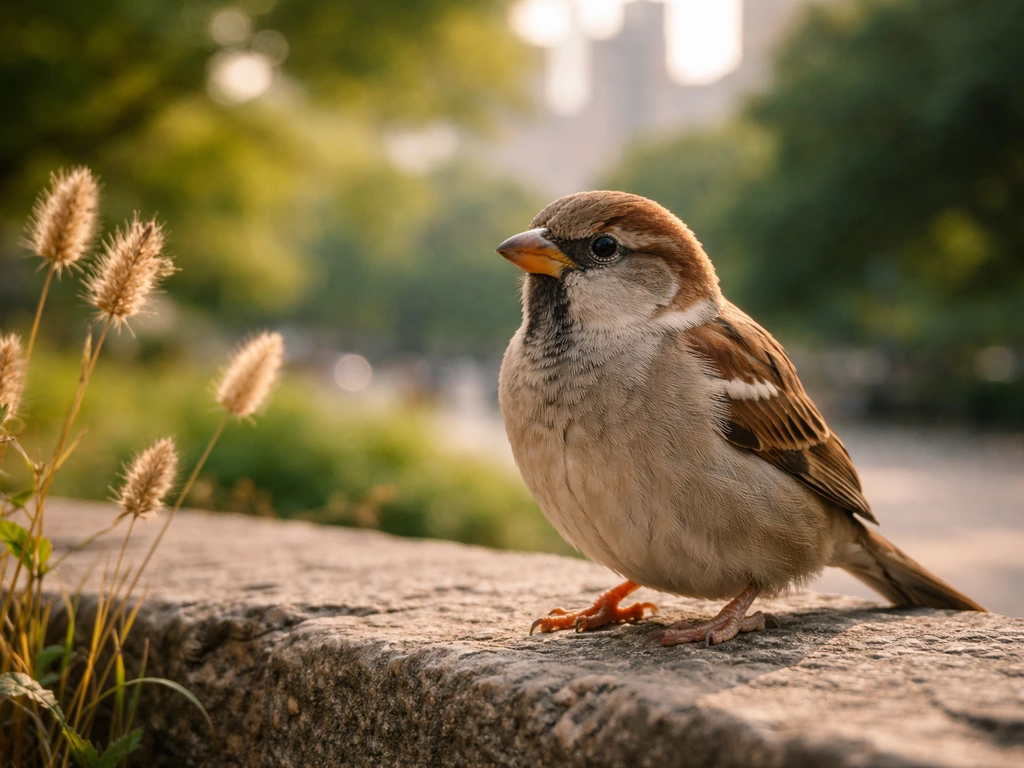
Across most cultural and spiritual traditions, sparrows cluster around a consistent set of meanings. They're small, common, and everywhere, and that's exactly why they carry so much symbolic weight. The sparrow doesn't demand your attention, but it's always there, which is precisely the point.
- Resilience and survival: sparrows thrive in almost every environment humans inhabit
- Community and belonging: they forage in flocks and rarely operate in total isolation
- Simplicity and humility: their ordinariness is the symbol, not their rarity
- Alertness and vigilance: their alarm calls and sharp reactions to threats are a real behavioral trait
- Joy in small things: frequently tied to contentment and everyday happiness in folk traditions
One of the most enduring symbolic framings comes from Matthew 10:31, where sparrows are used to illustrate the message "do not be afraid; you are worth more than many sparrows." The sparrow here isn't a grand symbol of power or mystery. It's the opposite: a creature so common and small that its care by something larger becomes the whole point. That emotional weight, reassurance over fear, shows up repeatedly in how people interpret sparrow encounters today.
Literal vs symbolic: what are you actually looking at?
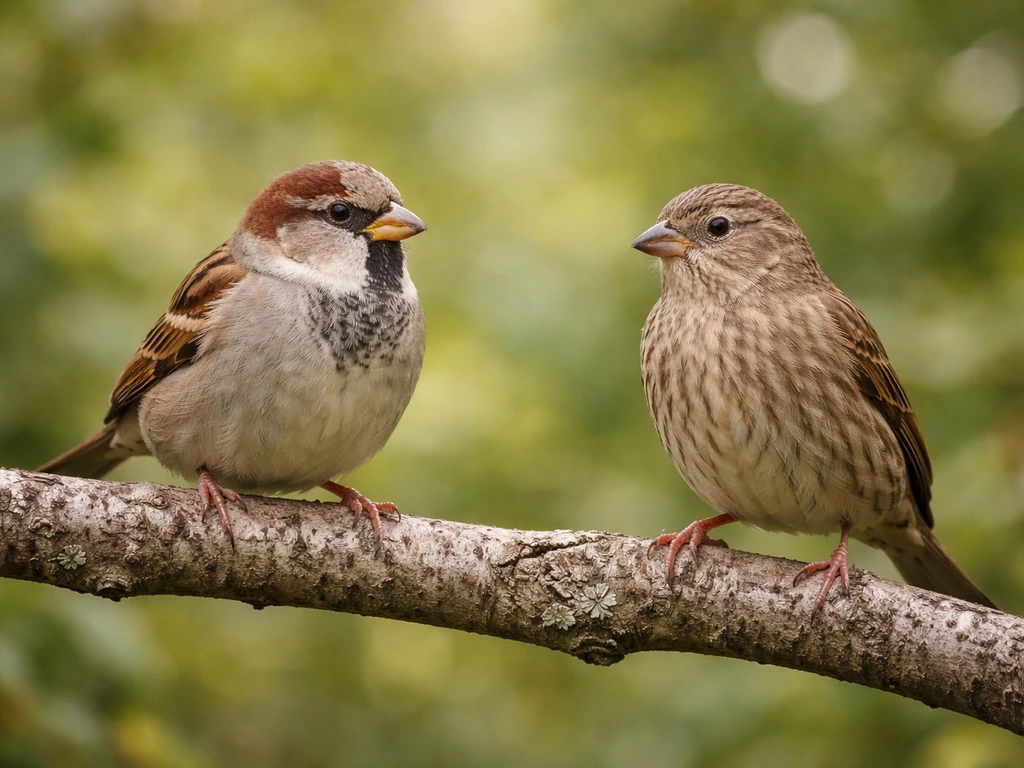
Before you dive into meaning, it helps to confirm you're actually looking at a sparrow. This sounds obvious, but it matters because misidentified birds lead to misread symbolism. blank" rel="noopener noreferrer">House Sparrows are the most commonly seen sparrow in North America, and they have a distinctive look: males show a gray head, white cheeks, black bib, and rufous neck. They're stockier than many similar small birds, noisy, and you'll typically see them hopping and pecking for crumbs or seed near eaves, fencerows, and urban edges.
Song Sparrows, Chipping Sparrows, and Field Sparrows are also frequently encountered, and they can look similar at a glance. Cornell Lab's All About Birds includes side-by-side species comparison pages specifically designed to help you separate look-alikes, such as the Field Sparrow from its close relatives, by noting differences in head patterns and eye lines. If you're assigning meaning to a bird, making sure it's actually a sparrow and not, say, a House Finch (which shares similar coloring in males but confines its red to the head and breast, not the bib) gives your interpretation a much firmer foundation.
Understanding what a bird's physical features signal can also change how you read a sighting. A bird's posture, its way of moving, and even the way it holds itself all feed into both ID accuracy and the behavioral cues that influence symbolic interpretation. Sparrows on the ground foraging in a loose group are exhibiting completely normal flock behavior rooted in optimal foraging strategy, not a supernatural sign, but that same behavior is what gave rise to the "community" symbolism in the first place.
Cultural and spiritual symbolism across traditions
Sparrows show up in spiritual and cultural contexts across the globe, and while the specifics vary, a few themes repeat consistently enough to be worth taking seriously.
Christianity and Western tradition
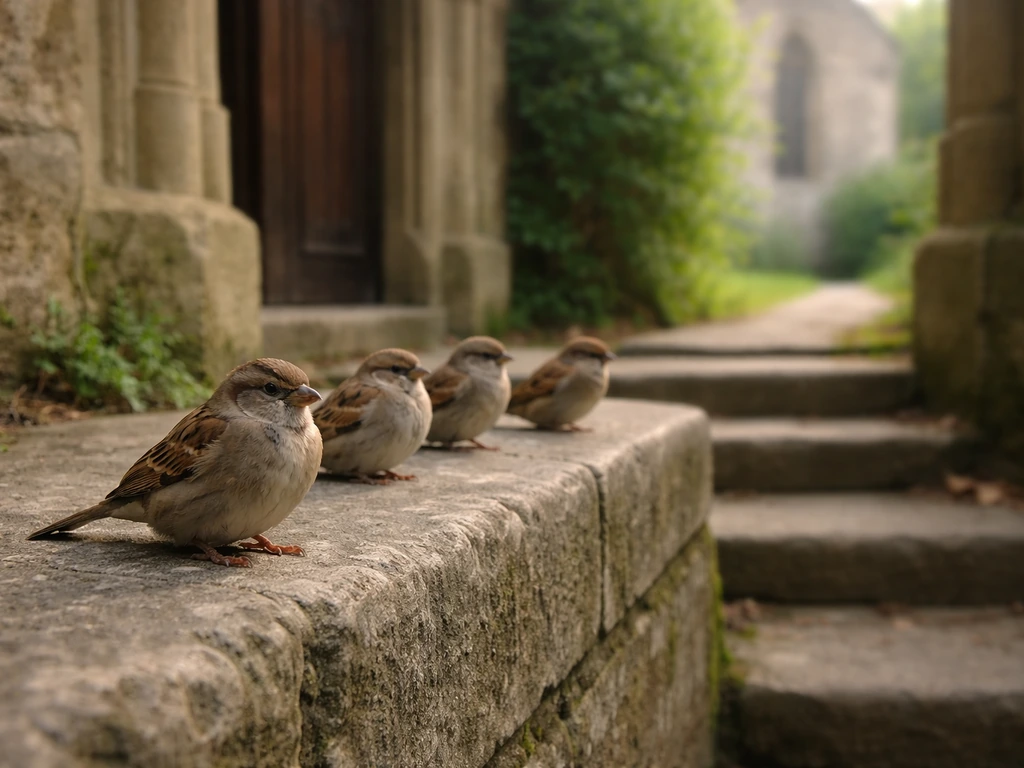
As noted above, the Christian tradition uses sparrows as a symbol of God's care for even the most humble creatures. This framing positions sparrows as reassurance symbols: if something so small and ordinary is watched over, so are you. This interpretation travels well even outside religious contexts. Seeing a sparrow during a moment of personal stress or uncertainty is frequently read, by people of many backgrounds, as a gentle reminder not to catastrophize.
East Asian and Indonesian traditions
In some parts of Asia and Indonesia, sparrows are treated as good-luck omens. Indonesian folk tradition, for example, associates sparrows with positive fortune, particularly when they appear near or inside the home. These meanings are culturally specific and shouldn't be universalized, but they do show up consistently enough in folklore summaries that they've become part of the broader Western internet conversation about sparrow symbolism.
General spiritual themes
Across symbolism-focused traditions, sparrows are frequently linked to good fortune, happiness, resilience, and love. These themes tend to be softer and more contextual than, say, eagle or owl symbolism, which carry heavier archetypal weight. The sparrow's message is usually gentle rather than urgent, everyday rather than extraordinary.
What your real-life sparrow sighting might actually mean
A lot of sparrow meaning gets assigned based on specific behaviors, and those behaviors often have a very real ornithological basis. Here's how to read the situation honestly.
Sparrow calling loudly or repeatedly near you
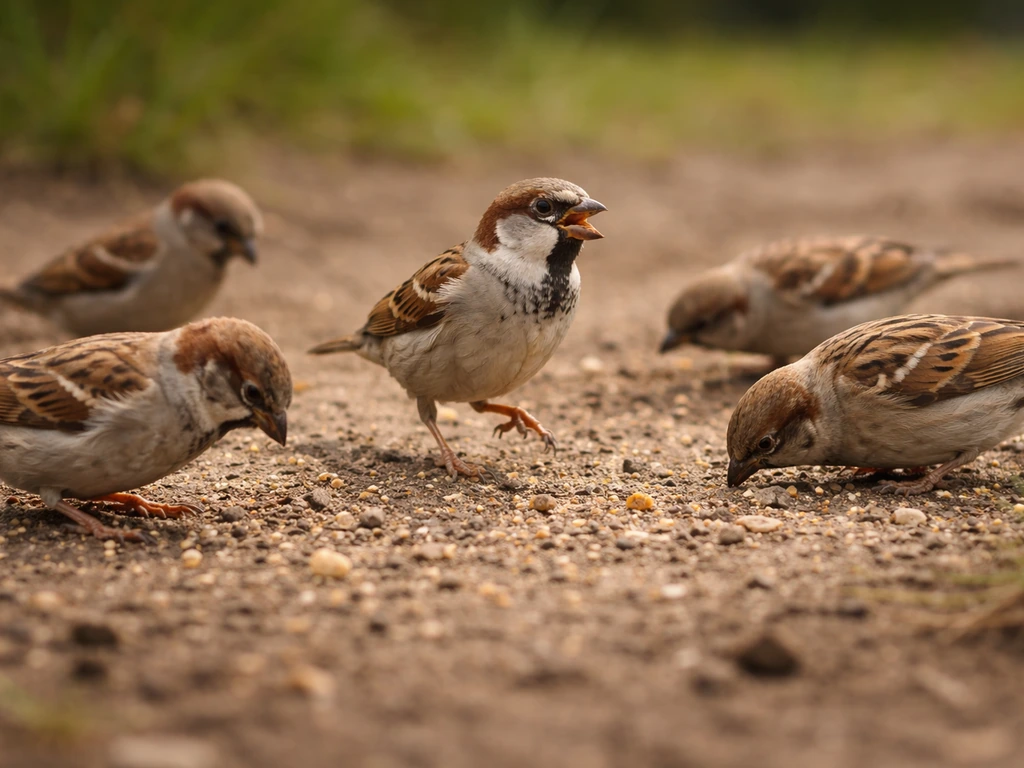
Song Sparrows produce a sharp chip note as an alarm or anxiety signal, used by both sexes when a predator approaches or when the bird is excited or stressed. House Sparrows have a blank" rel="noopener noreferrer">nasal alarm call (sometimes transcribed as "quer") and a shrill distress call. If a sparrow is being very vocal near you, there's a real biological reason: it's alarmed, protecting a nest, or communicating with its flock. The symbolic interpretation of alertness and vigilance that many traditions assign to sparrows is directly rooted in this actual behavior. The bird isn't mystically warning you, but if you're in a reflective headspace, it's a reasonable prompt to ask whether there's something in your own life worth paying closer attention to.
Sparrows foraging in a group near you
American Tree Sparrows and House Sparrows both forage in flocks, a behavior grounded in optimal foraging theory: more eyes mean better predator detection and more efficient food finding. When people repeatedly see sparrows in groups near their homes, the "community" symbolism they reach for isn't arbitrary. It reflects something the bird actually does. If you're going through a period of isolation or navigating a complex group dynamic, this is the sparrow observation most worth sitting with.
A single sparrow landing very close to you or on you
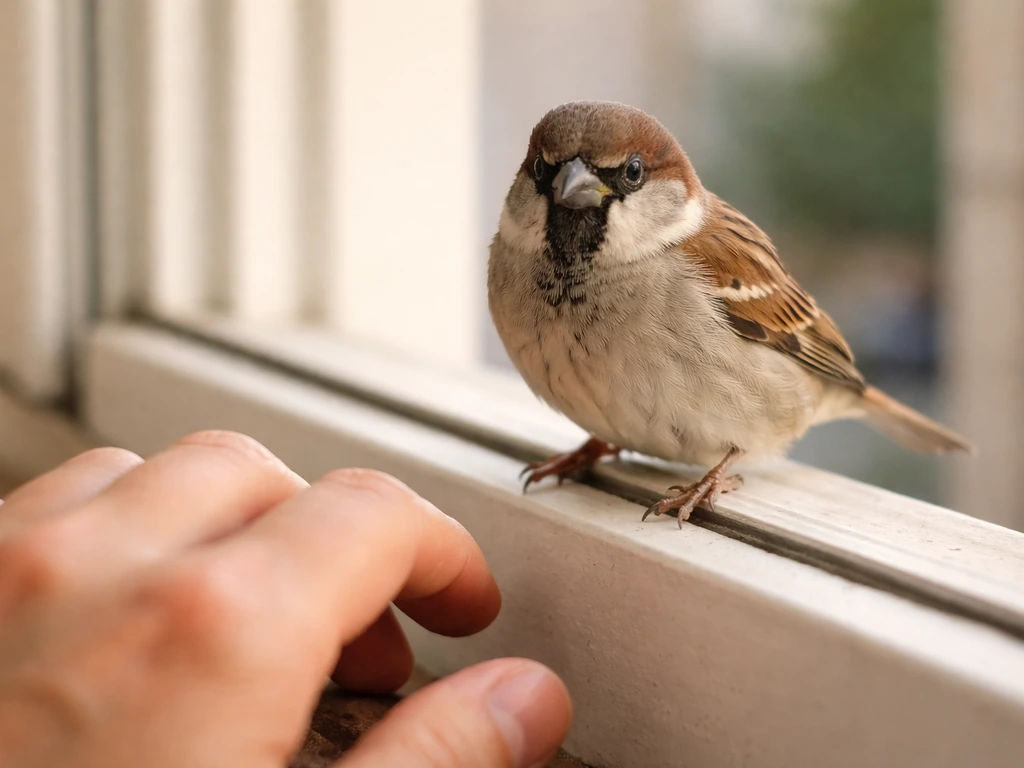
This is the sighting people most often attach strong meaning to, and it's worth being honest: House Sparrows are highly habituated to humans. They regularly flutter down to hop and peck for crumbs near people in parks and urban spaces. A sparrow landing near you is more likely a confident urban bird than a cosmic message. That said, if it feels meaningful and you're in a reflective moment, the traditional interpretation of closeness, connection, or reassurance is a reasonable one to sit with, as long as you hold it loosely.
Sparrow dreams: what changes the interpretation
Dream interpretation is genuinely context-dependent, which means a sparrow in a dream doesn't carry one fixed meaning. The species, color, number of birds, what the bird was doing, and especially how the dream made you feel all shift the interpretation significantly. A single sparrow sitting still in a gray landscape reads differently from a flock of sparrows moving through warm light.
| Dream context | Common interpretation | Questions to ask yourself |
|---|---|---|
| Sparrow in flight | Freedom, possibility, transcendence, forward movement | Am I moving toward something or running from something? |
| Sparrow singing or calling | Communication, self-expression, something needing to be said | Is there a message I've been avoiding sending or receiving? |
| Sparrow in a cage | Restriction, feeling trapped, suppressed potential | Where in my life do I feel constrained right now? |
| Dead or injured sparrow | Loss, vulnerability, grief, or transition | What in my life is ending or needs to be released? |
| Flock of sparrows | Community, belonging, collective energy | Am I neglecting my social connections? |
| Sparrow landing on you | Personal reassurance, connection, being seen | Do I need to trust that I'm being supported? |
The emotional tone of the dream matters as much as the visual content. A dream where you feel anxious watching a sparrow is not the same as a dream where you feel peaceful. Dream interpretation frameworks consistently emphasize this: vulnerability and strength can both appear in sparrow dreams, and which one applies depends entirely on the emotional context of the specific dream you had.
Superstitions and misconceptions worth skipping
There are a few sparrow superstitions that circulate online often enough that they deserve a direct look. One common claim, sometimes attributed to Audubon Society traditions, is that sparrows carry the souls of the dead, and that killing one brings bad luck. This is a piece of folklore, not a fact associated with the actual Audubon Society, and it's been repeated and amplified by culture-summary sites to the point where many people believe it's an established belief. It's worth knowing it exists as a story without treating it as a universal truth.
The bigger misconception to avoid is deterministic interpretation, the idea that a sparrow on your windowsill always means X, or that a sparrow in a dream always predicts Y. No reputable dream interpreter or symbolism tradition actually works this way. Sparrow symbolism, like all bird symbolism, is a prompt for reflection, not a prophecy. Just as you'd want to understand what a bird's talons or claws symbolize in the context of a specific sighting rather than applying a blanket rule, the same logic applies to sparrows. Context, feeling, and personal resonance always override generic symbolic definitions.
Another common one: the idea that sparrows flying into your home always predicts death. This is a very old superstition that appears across multiple European traditions, but it's not universal, and in some cultures (like the Indonesian tradition mentioned earlier), a sparrow entering the home is actually a good luck sign. If a sparrow flies into your house, the most practical explanation is that it's a habituated urban bird that followed an open window. The meaning you assign is up to you, but there's no cross-cultural consensus that makes one interpretation the correct one.
How to apply sparrow meaning to your life right now
If you've made it this far, you've probably got a specific sighting or dream in mind. Here's a practical process for turning the symbolism into something actually useful.
- Confirm the ID first. Was it actually a sparrow? A stocky, noisy, seed-pecking bird near human structures is almost certainly a House Sparrow. If you're less sure, compare it against similar species using a reliable field guide or species comparison tool before you assign meaning.
- Note what the bird was doing. Foraging in a group, calling sharply, flying low, sitting still? The behavior is the first layer of interpretation, and it maps to real biological function. Use that as your anchor.
- Note how you felt in the moment (or in the dream). Peaceful, unsettled, surprised, moved? Your emotional response is the second layer, and it usually points toward which symbolic meaning actually fits your situation.
- Match the symbolism to a current life question. Sparrows consistently point toward themes of resilience, community, simplicity, and reassurance. Which of those is most alive in your life right now? That's your answer.
- Hold the interpretation loosely. If the meaning you found doesn't resonate, discard it. A sparrow encounter that feels like nothing more than a pleasant bird sighting is also valid. Meaning doesn't have to be forced.
- Go deeper on bird symbolism if you want more context. Understanding how physical features like a bird's wings carry symbolic weight across traditions can help you build a richer interpretive framework that goes beyond any single species.
One more thing: if you're trying to distinguish a sparrow's feet from those of other small birds, it's worth knowing that what we casually call a bird's "feet" includes highly specialized structures. Understanding what bird claws are formally called and how they're structured can actually help you identify sparrows more accurately in the field, since their feet are adapted for ground hopping and perching, which is part of the behavioral signature that makes them recognizable.
Sparrow meaning ultimately works best as a mirror rather than a map. The bird itself is doing what birds do: foraging, calling, flying, surviving. The meaning you layer on top of that is yours to work with. What the sparrow tradition across so many cultures agrees on is that the smallest, most ordinary moments of life are the ones worth paying attention to. That's a message worth taking seriously, with or without a sparrow sitting on your fence.
If you're curious how other physical features of birds, like the spikes sometimes seen on birds, carry their own symbolic layers, or how the technical names for bird feet structures connect to meaning-making traditions, both are worth exploring as you build your interpretive toolkit.
FAQ
What does a sparrow meaning usually refer to, the bird itself or the moment I noticed it?
Most interpretations treat it as a relationship between the bird and your context, not a fixed message. Ask what was happening when you noticed the sparrow, what your body felt in the moment (comfort, unease, urgency), and what the bird was doing (foraging, calling, hopping, flying). That combination usually matters more than generic “sparrow equals X” ideas.
How can I tell whether I saw a sparrow or a finch when assigning symbolic meaning?
Use multiple field marks, not one color spot. For example, if the bird has a dark “bib” and a gray head with white cheeks, that points toward a House Sparrow. If it has a more uniform red limited to the head and breast, male House Finch becomes more likely. When you are unsure, delay the meaning until you can confirm the species, because misidentification is the fastest way to generate misleading symbolism.
If I see more than one sparrow, does that change the interpretation compared with a single sparrow?
Often yes, because “number” tends to shift the focus from a personal reminder to a community or situation-wide theme. Several birds foraging together commonly points to shared vigilance and collective behavior, while one bird lingering alone may feel more like an individualized emotional mirror. Still, the dream or sighting’s emotional tone should override the quantity alone.
What does it mean if a sparrow is unusually quiet or unusually still?
Unusual silence can be a situational clue, like reduced alarm calling, time of day, weather, or the bird conserving energy. In symbolism terms, stillness often gets read as “pause and observe” rather than “be warned,” but make sure the bird’s behavior looks abnormal for that species and setting, not just different from what you expected.
Is sparrow meaning different if the bird is at my window, on my porch, or inside my home?
Yes, primarily because the “where” often changes the practical explanation. Near a window or porch often suggests habituation to humans and an open entry path. Inside the home can still be explained by an open window or a short fly-in, but culturally people may attach stronger significance. If you want a grounded approach, interpret “inside” as both practical disruption and emotional symbolism, rather than assuming a supernatural cause.
How should I interpret a sparrow that lands near me but won’t come closer?
That pattern is often consistent with caution and appropriate spacing, not rejection. Symbolically, it can reflect “connection with boundaries,” where the message is to approach gently or take a smaller step rather than force closeness. If you feel pressured, that feeling is a useful clue that the moment calls for restraint, not escalation.
Do sparrow dreams have a meaning if I cannot remember the species or color clearly?
You can still interpret the dream, but you should shift from “species certainty” to “core themes.” Focus on the emotions, the dream setting, and actions (watching, chasing, feeding, being frightened, feeling comfort). If you truly cannot tell whether it was a sparrow-like bird, treat the dream as a symbolic prompt about those emotions rather than relying on a specific sparrow definition.
What if I keep dreaming about sparrows repeatedly, does that make it more predictive?
Repetition usually indicates psychological salience, not prophecy. A repeated sparrow dream may highlight an ongoing theme like resilience, social connection, or vigilance, especially if your real life includes stress about safety, belonging, or communication. A practical step is to track what the dream felt like and what was going on in your week each time it appeared.
What is the safest way to avoid “deterministic” sparrow interpretations?
Use sparrow meaning as a reflective question, not a prediction. For instance, instead of “a sparrow means X will happen,” try “What in my life needs reassurance, community, or attention right now?” If a story online claims a guaranteed outcome, especially around death or specific events, treat it as folklore and keep your interpretation non-literal.
Are there any common mistakes people make when reading sparrow symbolism from online posts?
Two big ones are copying someone else’s interpretation without matching their context, and treating cultural stories as universal rules. Another common mistake is assigning meaning from a single visual detail, like “a sparrow on a fence,” while ignoring behavior, your emotional state, and whether the bird was likely a House Sparrow versus a different species.
What practical action can I take after a sparrow sighting or dream that feels meaningful?
Pick one small, concrete step that matches the likely theme. If the moment felt like reassurance, it can be a “reduce catastrophizing” action, like writing down what you fear and what evidence you have. If it felt like community, call or check in with someone. If it felt like vigilance, do a real-world safety or planning review, like double-checking a schedule or addressing a neglected task.
Next Article
Bird Blindness Meaning: Causes, Signs, and What to Do Now
Bird blindness meaning: spot signs, tell vision loss from other issues, and take safe action or get urgent vet care.